In the healthcare marketing industry, just when you think you have everything under control, a new change comes along. And, honestly, it’s a heavy responsibility for leaders to build a team structure that can withstand the pressures of the ever-evolving healthcare marketing space, but it also keeps things exciting!
In this week’s episode, our CEO, Jenny Bristow, shares two key concepts from the Entrepreneurial Operating System (EOS) framework that have helped Hedy & Hopp build a solid marketing team that has withstood many industry changes: the accountability chart & the “Right Person, Right Seat” framework.
Episode Notes:
Key Strategies for Structuring Marketing Teams
Separating the person from the problem is vital when restructuring. If a team member lacks the capacity for a specific modern technical role, it does not necessarily mean they must leave the organization; they may simply belong in a different seat.
Connect with Jenny:
Email: jenny@hedyandhopp.com
LinkedIn: https://www.linkedin.com/in/jennybristow/
If you enjoyed this episode, we’d love to hear your feedback! Please consider leaving us a review on your preferred listening platform and sharing it with others.
Jenny: Welcome to today’s episode of We Are, Marketing Happy, A Healthcare Marketing Podcast. I’m your host, Jenny Bristow, and I’m also the CEO and founder at Hedy & Hopp, a full service, fully healthcare marketing agency. I’m excited to be here chatting with you today about right people, right seats: how you can restructure your marketing team for today’s marketing demands.
I have had countless conversations over the last four months from marketing leaders at different systems of various sizes across the country, and they’re all struggling with the same problem. So I thought I’d record a podcast today to chat about it and give you a little food for thought if you’re dealing with something similar. Everyone knows all of the various pressures that have been pushing down on healthcare marketing teams.
We’ve had to pivot with positivity and get really good at compliance, which means our analytics technical skills have had to really improve and deepen over the last few years. Now we are learning new technologies for those groups that are looking at moving over to the Epic suite of tools for marketing technologies and CRMs. It just never stops, right?
The minute we feel like we have all of our marketing programs under control, a new change happens and honestly, that’s one of the reasons I love this industry. I think that it is a really big responsibility to have to make sure that we are staying on top of those trends and the shifting demand so we can help patients get access to care.
But I’ll tell you, as a marketing leader, when you have a team that you’re trying to manage, it can be really hard to figure out how you can continuously make sure you have the right structure for your marketing team, make sure you have the right people and they have the right skill sets. So it’s really a combination of decisions that have to be made.
Here at Hedy & Hopp, we have been an EOS organization for about five years. So EOS stands for Entrepreneurial Operating System. It is based off of the book called Traction by Gino Wickman. Phenomenal read. I strongly recommend it when people begin working with us. One of the things they often say is, oh my goodness, you are so organized for a marketing agency. This is typically how I feel agencies run, especially agencies that are run are started by creatives, right?
There’s typically a lot of chaos within the organization. Well, about five years ago we decided to implement EOS because we did not want to have any chaos within our organization. We wanted to really make sure that we understood our purpose as our organization, for our organization.
Everybody understood their roles and their responsibilities for helping us accomplish those goals and that purpose. And we had a structure to be able to communicate where we were going and why, and it has worked wonders. It has been phenomenal. The growth that we have experienced is phenomenal. It has just been a really great way to be able to grow an organization that has a solid foundation.
So there are a couple of key fundamentals in the EOS system that I want to share with you today. If you’re a marketing leader, this does not mean that you have to implement EOS for your marketing team or your organization. But there’s a couple of philosophies and structures that they recommend, and that is part of the EOS system that could be helpful to just kind of cherry pick them out.
So let’s talk about it. First is an accountability chart. So everybody has heard about thinking about your team and the titles that people have and the org chart set all of that aside. We’re not going to think about that at all. Instead, what we need to think about with an accountability chart is really what are the functions that a company needs and the role responsibilities?
So what are things that people need to own within your marketing team, and what are the skill sets for those individual boxes? We’re going to link to resources in the show notes. So you can actually see what one of these look like. But each box in the accountability chart is a person that is a seat. So within that, let’s say, for example, one of them may be, well, I’ll just share mine within our organization.
My seat is Visionary. So I am the top box at Hedy & Hopp. And my, accountabilities for the organization is to drive the organizational vision to manage large relationships for our organization, to drive the culture of our organization and a couple of other things. So when you’re building an accountability chart there, usually for a marketing team, you usually will have one, perhaps for a box for content strategy, one for paid media, one for analytics, one for CRM.
Right? So you can map all of those things out, and you really want to make sure that you’re thinking about what are the core functions. Make sure each one has a box. And then what are the five roles or the five responsibilities? The cool thing about accountability charts is it does not leave any vagueness. So for example, within content strategy, only one box has a content strategy in it.
They’re not multiple boxes with content strategy. So you always know who is in charge of that for your team and for your organization. Zero ambiguity or confusion exists after this exercise is completed. The big difficult thing about this is you have to completely set your and all of the humans to the side. This is about structure, not about humans.
So don’t think about your current team at all as you’re designing this. Imagine you’re building an ideal structure for your organization’s marketing team from scratch. Your hands aren’t tied for any reason. You’re not trying to retrofit current staff members into positions or into titles because they’ve been there for so long. Set all of the humans aside, and then map out all of the areas of responsibility and all of the functions that you really need to have to make your team successful.
A couple of things that I’ll note is you may choose to outsource some of these boxes to agency partners, and that’s okay. Still map it out. So you can understand the functions you need to be able to operate efficiently. Another concern that we’re seeing over and over is there may be some ambiguity around who owns certain functions. So for example, marketing analytics often IT will own the data pipe or the technical structure, but marketing will own the strategy.
And putting data into the structure and getting data out for reporting purposes. Set all of those to the side from a concerns perspective. We’ll deal with that later. For now, map out all of the things that you need to operate efficiently. Once you have all of that mapped out, then you have to start thinking about RPRS, that stands for right person and right seat.
So the first thing you have to do as you begin reviewing your current team members is you have to honestly look at it through the lens of right people. Do they share your organization’s core values? Are they the right person for your team? Do they have the interest in continuing and to grow their skill sets? You have to really take a look at that first.
And that’s what the RP is in RPRS. If they don’t share your culture, there is not a box for them in the accountability chart. If they do share your culture and you have RP, then you can start going into RS right seat. This is determined by what EOS calls a GWC framework. So that is Get It, Want It, and Capacity to Do It.
So “Get It” is do they understand the soul of this role? Do they understand what needs to be done? So do they get how a CRM drives patient volume, or do they just see it as a database right. For paid media, do they understand performance marketing and continuous optimization, or are they just really good at building ad campaigns?
Right. That’s the G that you have to decide that part the “Get It” first. And then W, “Want It.” Do they want these five responsibilities every day? So, for example, somebody who’s been there for a long time may say yes just to keep their job, but they may hate tracking, they may hate UTM parameters, they may not want anything to do with it, and they may just say that they do in order to stay on your team.
So you have to really push and understand. Do you want this right? Are you excited about this role? And then C is Capacity. Do they have the mental, emotional, and technical capacity to actually fulfill the position? So, this can be really difficult because the tough truth here is that you’re likely going to find some of your favorite, most loyal people do not have the capacity for modern technical seats like predictive analytics or the clinical CRM logic.
And that’s okay. If it means they belong in a different seat, or you may need to hire external talent for that specific function, that does not mean that they need to exit your team. If you can find a different seat for them. So that’s why we really separate that decision of right people first and then right seat.
So, this is we have found just such a phenomenal way to really separate the person from the problem. And really make sure that you’re serving your organization’s greater good and solving the problem first. So again, I strongly recommend reading Traction. I’m not saying you need to implement EOS for your organization, but I really, really like how simple it is to think about processes and structure for your organization.
So it’s a quick read. There’s some great podcasts. Also, you can specifically look for podcast episodes around accountability charts or RPRS and listen just to those. But it’s a really kind of refreshing way outside of a traditional corporate structure, to think about the way that you’re structuring your team for today’s hectic environment. I want to give a quick shout out to our EOS implementer, Kevin Hundel.
Kevin’s phenomenal. Kevin has been with us since day one, and he has been a big part of our organization’s growth. So if you are looking for an EOS implementer, I strongly recommend Kevin. He’s just a phenomenal human. In addition to being really, really good at what he does. So hopefully this gave you some really good food for thought.
If you have any questions or just want to brainstorm marketing team structure, give me a shout. This is a topic that we’re really passionate about here at Hedy & Hopp, and always happy to share our wisdom or even connect you with other leaders in the space that we know are currently trying to tackle the same problem. Thanks so much for tuning in.
Please give this episode a like. Leave us a review, share it with a colleague that you think may find it helpful, and be sure to tune in again next week for another episode of We Are, Marketing. Happy. Cheers!
Why healthcare marketing? For many people in the industry, healthcare marketing is a deeply purposeful career path that allows them to positively impact others’ lives and improve access to healthcare. In this week’s episode, our CEO Jenny offers guidance for new grads and professionals who may be looking to pivot on rising industry trends and essential skills for success in healthcare marketing.
Episode Notes:
Major Industry Trends
Essential Skills for Success
Connect with Jenny:
Email: jenny@hedyandhopp.com
LinkedIn: https://www.linkedin.com/in/jennybristow/
If you enjoyed this episode, we’d love to hear your feedback! Please consider leaving us a review on your preferred listening platform and sharing it with others.
Jenny: Hi friends! Welcome to today’s episode of We Are Marketing Happy, A Healthcare Marketing Podcast. I’m your host, Jenny Bristow, and I’m also the CEO and founder at Hedy & Hopp, a full service, fully healthcare marketing agency. We are really excited today to chat about the future of healthcare marketing, a roadmap for new grads and those new to the industry.
It has been a really fun start to the summer, and one of those things that always comes with the wrapping up of a school year is chatting with new graduates about their hopes and dreams for their profession. So as I was chatting with my team, we thought it would be fun to put together an episode giving some guidance to those that are either hoping to enter healthcare marketing fresh and as the first step of their career after college, or for those that are interested in pivoting into healthcare marketing, and they’re looking for a little bit of guidance about what the industry trends are.
So today we’re going to talk about three major pillars that are shaping the healthcare marketing industry today. And then we’re also going to talk about four skills that if you’re interested in being successful in healthcare marketing, they are things that I believe are very important for folks entering the space. And then for bonus, we have collected input from a variety of Hedy & Hopp team members, and they’re going to share their thoughts and opinions on some advice for new grads and those entering our space.
So let’s kick it off and talk a little bit about “the why.” Healthcare marketing can be extremely rewarding. If you talk to anybody who is in this industry, you will hear time and time again that folks love it for really two reasons. The first, and most important is it is a deeply purpose driven profession.
So it’s a great fit for those of us that perhaps don’t feel like we’re the right person to pick up a scalpel. I, for one, get pretty, lightheaded when I see blood. But I want to make a difference in the lives of folks and want to feel good about where I’m putting my talents. So, that’s why I had Hedy & Hopp specialize in healthcare marketing, as I wanted to know that all of my marketing and digital and tech talents were really making a difference in the world, and wanted to know that all of my work was helping folks find and access care.
Maybe making a bad day a little bit better because of a streamlined online experience. And we knew that we could do that. So most people in healthcare will share that exact same sentiment. If you’re in healthcare marketing, you very much feel good at the end of the day about the work that you put in.
The other thing, though, is it also is pretty, recession resistant. So that’s definitely a positive. If you’ve ever worked in industry, that experience experiences a lot of economic turmoil. That is typically not something that you will see in healthcare. So our industry, though, is facing a huge variety of different shifts coming from different directions. But I really believe that new grads really have a distinct advantage if they possess a handful of modern skills.
So let’s get into it. First, what are the big macro trends that are happening in healthcare marketing today? What is shifting? The first big trend that you need to be aware of is the death of the standard Google search journey. So it used to be that whenever patients either had something weird going on with their health and they wanted to research a symptom, or they needed to find a provider, the first place they would always go would be the Google search field.
They would begin typing in, describing their symptoms, or they would begin doing a “near me” search to be able to find, say, an orthopedic surgeon near me, to be able to try to find people. That isn’t happening as much anymore. It still happens, of course, but the percentage of folks that go through that patient journey is getting smaller each year.
Instead, what they are doing is they’re using things like generative AI like ChatGPT or Gemini for pre-diagnostic searches. So they are trying to help diagnose what is happening to them and understand the what or the why behind it. And then they turn to social media often like TikTok and Instagram Reels as search engines for provider reviews and health tips.
So, lots of folks once, perhaps they know maybe directionally what is happening, they will go and try to find a provider that has a strong, thought leadership online, maybe try to research some potential solutions online or next steps for their care. So it’s no longer about traditional SEO and keywords. It’s about topic authority. And that really shows up through either AI or social media.
So the different channels and the technology behind showing up and being relevant is really shifting. The second trend that we are really seeing is that authenticity beats high production all day long. So, the era of heavily polished corporate hospital commercials is really losing ground for a variety of reasons. You have deepfakes, you have AI generated content.
All of those things are forcing consumers to really question the content that they are consuming online. And, really just trying to question if it’s real or not. So in 2026, patients are really demanding transparent, unpolished, native video content. They want to see real doctors giving quick health tips or real patient advocate stories. They want to see something shot on an iPhone.
They want to see something that isn’t highly edited in post-production. And then finally, the last trend that you really need to be aware of if you’re entering the space is privacy and the measurement reckoning. So there have been massive crackdowns on tracking pixels, and that has resulted in folks having to get really creative with the way that they are tracking measurement of their campaigns.
Some folks in the industry have really given up the goal of tracking anything at all, but I strongly discourage that use. There are still a lot of things that you can do. But we’re really up against a fractured patchwork of state-level privacy laws. So we have, I believe 20 at this point. Different states have privacy laws.
FTC and HIPAA, all of these different areas are putting regulations on health care marketers. And the way that we’re tracking performance. So we have to prove our ROI without violating patient trust. So let’s talk about how you can combat these three trends. What is the skill stack or what are the things that new grads or people entering this industry need to be really aware of?
The first that I think is really important is the human-in-the-loop AI prompting and workflow automation. So don’t just learn how to use AI to write a blog post or write your emails. That’s worthless. People can, at this point, identify AI-written copy if you’re soulless, do not do that, but use AI to take a massive compliance approved medical document and slice it into a multichannel campaign.
So, let’s say, for example, you have post-surgery tips or guidelines for an orthopedic program. You can use AI to be able to provide recommendations about how to cut that up in a variety of channels and formats. And then humans step back in to be able to actually create that content. Agencies and in-house teams really want grads to use AI as a productivity multiplier, not as a thinking replacement.
So I should not be creating content, but it can help you think about things through a different lens, or about things that have really structured guidelines around them. The second skill is microlearning and short form video storytelling. So doctors are busier than ever and patients have very short attention spans. You have to master the art of micro learning, so taking complex clinical topics and turning them into 60 second or shorter mobile first video concepts that educate and build trust instantly.
So become a pro at storytelling through social. The third skill is privacy first data and analytics literacy. So if you can look at a marketing analytics dashboard and understand the difference between something that would be considered a vanity metric, like a video of you or an impression on a paid media campaign and downstream business outcomes like actually scheduled and attended appointments while keeping patient information intact.
You will be the smartest person in that entry level entry interview room. So understanding what all of those variables are and what the different compliance components are that are forcing us to think differently, is going to be a really big opportunity to stand out. And then my favorite skill, the fourth, is having extreme empathy and healthcare literacy.
You aren’t selling shoes. You are dealing with people who are often scared, sick, or confused. They may be having the worst day of their life, so you need to be able to understand health literacy and write copy that a stressed out caregiver or a patient can easily understand. It’s a superpower, and that is not something that AI is going to take over anytime soon.
So we’re going to take a quick hiatus at this point. I would love to hear from some Hedy & Hopp team members. What’s your thoughts? What’s your perspective? What should new grads be thinking about as they are entering the workforce? Take it away.
Kevin: My advice for anyone getting into healthcare marketing is to stay curious and never stop learning. Platforms, policies, and strategies change constantly. So being adaptable is one of the biggest strengths you can have.
Philip: Use all of these awesome AI tools and understand with this abundance of information and ideas. The best thing to do is become a great storyteller and personalize your information that you’re putting out there.
Suzie: Don’t be afraid to get your hands dirty and learn how all the different platforms work. It’ll help you understand the difference in terminology across them, and also help you build things out in them more effectively later on.
Heidi: If you’re just new to healthcare marketing, it can feel not very fun to not be able to do any remarketing or custom audiences, but there’s actually a lot of opportunity to get creative still and still be completely compliant. Think about the “walled garden.” That’s what we call it a lot here.
If there’s any audiences that are generated in-platform, you can still use those because you’re not transferring that information elsewhere. And there’s no PHI involved.
So there’s still like video remarketing. There’s still a lot of things that you can do. You just got to get a little bit creative, and it can still be fun.
Megan: My piece of advice would be to be up to date on the WCAG standards. Things are changing all the time, and it just helps people have more accessibility and more of a user experience on websites, which gives them the ability to have more access to care.
Kate: My piece of advice would be to make sure that you’re listening not just to the physicians, not just to the hospital staff, but also to your patients. Patients are the reason that any of us are in business, in healthcare, and we need to make sure that they’re the top priority at all times.
Shelby: Always consider yourself a student. Healthcare marketing is constantly changing. Every single day, there’s something new. Whether that’s technology, whether that’s privacy. So subscribe to the newsletters, join the webinars, listen to the podcast, absorb as much as you can from your colleagues, from others in the industry. And just always, always consider yourself a student
Jenny: Thanks for those fun insights team. All these fun to have multiple voices sharing insights into the podcast and it was a great episode to get everybody’s perspectives. If you know a new grad, if you know somebody new to this industry, share this episode with them. It hopefully will provide some insights from that 10,000ft perspective of what is healthcare marketing facing today, and what are the skills I need to focus on over the next couple of months as I’m entering the workforce?
If this episode provided value to you, please give us a review. Give us a five star, like us, follow us on all the different channels. We drop episodes usually every Friday and we will see you on a future episode of We Are, Marketing Happy. Cheers friends!
With the recent introduction of the American Medical Association’s (AMA) seven-priniciple framework designed to protect physicians from unauthorized use of their likeness, AI-generated deepfakes are having a clear impact on the healthcare landscape. In this week’s episode, our CEO, Jenny, presents strategies for marketers to maintain undeniable authenticity amid the current “crisis of trust.”
Episode Notes:
Marketing Strategies for Authenticity
Organizational Compliance Tips for Marketers
AMA AI-generated deepfakes: Key policy principles and proposed protections:
https://www.ama-assn.org/practice-management/digital-health/ai-generated-deepfakes-key-policy-principles-and-proposed
Connect with Jenny:
Email: jenny@hedyandhopp.com
LinkedIn: https://www.linkedin.com/in/jennybristow/
If you enjoyed this episode, we’d love to hear your feedback! Please consider leaving us a review on your preferred listening platform and sharing it with others.
Jenny: Hi friends! Welcome to today’s episode of We Are, Marketing Happy – A Healthcare Marketing podcast. My name is Jenny Bristow and I am your host. I’m also the CEO and founder at Hedy and Hopp, a full service, fully healthcare marketing agency. I’m here today to talk to you about the rising crisis of AI deepfakes in video and social media content online, and the impact it can have on us as health care marketers.
This week, the American Medical Association actually introduced a comprehensive policy framework to prevent physicians from unauthorized use of AI-generated deepfakes. So they put out a press release with seven policy principles for a framework to help protect physicians. The AMA CEO, John White, talked about how, with the rising volume of deepfake social media content, online protections need to be put in place for physicians.
And as a marketer, I completely agree. We have all seen social media clips go viral, and to a more discerning eye, we can easily see that these are AI. But more and more often this content is becoming so sophisticated that it’s really difficult to be able to see with the naked eye if something is fake or not. So the AMA framework is built around seven principles.
I will link to a full article in the show notes for you to be able to read it in depth, but it really focuses on physician identity protection, making sure that there’s explicit informed consent if their likeness is used. Banning deceptive impersonations, making sure that consent is opt-in with consent, being able to be revoked. Mandatory labeling and transparency. A shared responsibility around platforms, hospitals and vendors implementing safeguards, including rapid takedown mechanisms and clear labeling if content is AI generated.
Enforcement and remedies if AI content is found to be used, and minimizing the administrative burden and ensuring that protections are the default with standardized consent processes that don’t create an undue burden. So the seven policy principles are meant to create a framework for how, physicians really should be collaborating with hospital systems and vendors to be able to ensure that their likeness is not used irresponsibly, or with a deepfake when, it is identified, you know, how can you quickly rectify this?
So that’s what I want to talk about today is as a healthcare marketer, what is your role in that? I mean, right now, we’re really seeing a crisis of trust for content online. This really started gaining traction during Covid when we were really dealing with misinformation, and now we are really dealing with the ability for technology to impersonate a physician and use their likeness, video or voice only, and making it seem as though they put content out.
And so we’re really having a crisis of trust in this moment. And so, as a marketer, our new mandate is definitely that we need to fight fake video and audio of doctors within our systems. And the antidote to that really, I believe, is undeniable authenticity. Right? So really making sure that we are putting out content that is easily authenticated by viewers and making sure that we’re creating a premium human in the loop experience for our viewers and for folks that are trying to research things online.
So search engines like Google, Google has the EEAT experience, expertise, authoritative ness, and trustworthiness approach to content and content that they prioritize within their search rankings. That’s really the way that we should be viewing the content that we’re putting out for viewers online. Our patient population also really our greatest asset as health care marketers, as our real living workforce.
So how are we going to actionize that? I have a handful of tips of ways that you could be thinking about action, to be able to move some real content forward. So first is you have to realize that raw, unpolished content is the new high-production video. Nobody wants super highly produced content anymore. If you think about social media influencers and kind of the TikTok style of content, it is raw.
Not highly edited, not highly polished. They use, you know, mobile, inexpensive microphones, usually shot on an iPhone. AI videos, deepfakes especially look usually highly polished. They usually use generic stock backgrounds. And so you can combat that with raw, behind-the-scenes, unedited video content. So, for example, physicians could film some or some, in nurses, somebody within your system, you can have them some quick day-in-the-life shorts or record them walking through hallways of your actual recognizable hospital.
Right. Like make the scenes in the background, something that visually, patients will be able to recognize as being part of your system. Also think about verification social campaigns. So actually create a campaign around something like real doctors, real answers. Right? So explicitly talk about how you’re creating verified advice and how you are putting real physicians or clinicians at the front to be able to talk with the patient population.
Use features like Instagram Live, LinkedIn audio spaces, interactive Q&As, anything where you can really go back and forth with folks. And it’s not something that an AI deepfake really could create. Make sure, next, that you have a multi-channel footprint. So don’t just rely on social media videos, which are the easiest to fake, but build an entire ecosystem. Make sure on your physician profiles that you have video content there that a viewer, if they see a physician on another channel, they can go to the physician profile and see if that content matches, see if, you know, the likeness matches.
And then finally localize the content, how the content that you create not be something that can apply to everyone across the country. Talk about hyper local issues like local allergy spikes, community wellness, event specific regional health trends, things that are happening in your back door that a deepfake, you know, just wouldn’t even have interest in participating in.
It will really anchor their authenticity and the physical community that you live and serve. And then the last thing you need to think about is how, as a marketer, can you help your organization comply with that seven step framework that AMA is working to introduce. First, make sure that you are auditing consent and media releases. One of the things that AMA highlights is that physician likeness is a protective right, and calls for explicit opt-in and revocable consent.
Remind your team to review their internal marketing media releases. Are your old forms giving blanket permission to use their voice and image forever? If so, work with HR to update forms on file. Make sure that you’re complying with this new framework, and make sure that you have all of your T’s crossed and I’s dotted. Next, you have to also consider that shared responsibility framework.
So the AMA stated that they believe hospitals and health systems share the responsibility to police deep fakes. So as a marketer at a system, one of the things that you can do is if your marketing team spots a deep fake or copycat account using money, your doctors names are faces. You need a rapid response plan. So work on creating that rapid response plan ahead of time, and then make sure that your team knows how to execute a fast takedown request on meta YouTube, and TikTok and then finally use it as a positive internal communication opportunity with your physicians.
Write a memo or newsletter explaining that you know, AI defects are a rising concern in the medical community. Here’s what we are doing to be able to protect our physicians and combat the fake content that is being put online, and help make sure that our patient populations can access reputable information from our system. It is a massive opportunity for you to build trust within your own system, for your physicians to know that you are, number one, aware that this is something that they are dealing with.
And number two, that you’ve got their back and are happy to not only handle some of the foundational components, like making sure you have a rapid response plan in place, but also if they have additional questions, that you can be a resource to help make sure that they feel educated. Some AI platforms like Gemini are doing some things to be able to make sure that AI generated photos and content.
Video content can be easily identifiable, like Gemini, for example. It’s called a SynthID to digital watermark. So even if you crop out that little star watermark, that it automatically puts on it, that is. And the SynthID is embedded in the code. So it’s very easy to be able to identify if it’s generated by AI. Hopefully all of the other platforms will be following suit, and this will be something that, in five years from now, will be able to look back on and laugh, because it’s something that we’re no longer dealing with.
But until then, being proactive and making sure that your physicians know that you’ve got their back and you’re on their side will go a long way to building trust not only with them, but also with your broader patient population online. So this episode was helpful. Please give us a like, be sure to follow the podcast so you get notification of our new releases each week.
And then if you found this useful, share it with a colleague. If there’s somebody within your organization that you think would find this information helpful, give it a share. Again, we’ll be linking the AMA release in the show notes. You can read more about it in depth. And thank you for tuning in to this week’s episode of We Are, Marketing Happy. We will see you next week! Cheers!
The summer months bring an uptick in travel and an increase in “unplanned” care needs, with travelers searching locally for urgent care, sports physicals, and pharmacies. In this week’s episode, our CEO, Jenny Bristow, provides strategies for optimizing during the summer months to capture “near me” searches from individuals and build trust with those who may not be familiar with your organization.
Episode Notes
Strategies for building a strong foundation of organic SEO:
Start with the basics, ensuring your Google Business is up to date with accurate hours for the summer months. Then optimize your organic presence for local searches, by creating local hyper-local landing pages and optimizing them for the conversational, long-tail searches that people are likely to type into their phones.
How to leverage paid search for a precision strike:
If your area allows, increase bids around airports, train stations, or popular resort clusters to capture travelers through those areas. Utilize local inventory ads to show the real-time availability of common summer needs, like EpiPens. Consider call-only ads to capture people with minor crises who want to talk to a real person rather than spending time browsing a website.
Tips for optimizing for AI (GEO & AI Agents):
AI models now summarize the “best” local options, using website’s structured schema.org data, that clearly defines location, services, and credentials. Be sure to maintain a positive online reputation, as AI models increasingly pull from sentiment in reviews. Clearly state insurance acceptant, wait times, and out-of-state policies to assist potential patients and feed accurate data to AI platforms.
Connect with Jenny:
Email: jenny@hedyandhopp.com
LinkedIn: https://www.linkedin.com/in/jennybristow/
If you enjoyed this episode, we’d love to hear your feedback! Please consider leaving us a review on your preferred listening platform and sharing it with others.
Jenny: Hi friends, welcome to today’s episode of We Are, Marketing Happy, A Healthcare Marketing Podcast. I’m your host, Jenny Bristow, and I’m also the CEO and founder at Hedy & Hopp, a full service, fully healthcare marketing agency. I’m excited to come to you today to give you some food for thought. As you’re thinking about the upcoming summer months, I want to encourage you to have it be a “near me” kind of summer.
So most marketers are thinking about going into vacation mode, perhaps excited about your own vacation, but people are also entering your service area while they are going on vacation. So are you currently optimizing your searches online through organic, paid, and AI to make sure that you are showing up appropriately for all of those “near me” types of searches?
So today that’s what we’re going to cover. I’m going to break down those three different categories and give you some food for thought and things that you can go back and chat with your team about. Make sure you’re really maximizing all of those opportunities. So first let’s talk about organic SEO. We’re going to kind of break out AI optimization and organic SEO separately.
Just because the recommendations are going to be a little bit different for each area. So with organic SEO, the first thing that you want to think about is really creating or optimizing some hyper-local landing pages. So don’t just have one page for urgent care, perhaps have one for urgent care near “beach name” or near “tourist town name”.
Really think about those areas of how people and why people are entering your service area for their summer vacations, and making sure that you’re creating landing pages that cater to those audiences. Next, think about your Google Business Profile hygiene. Are you making sure that open now hours are accurate, which is really critical for summer holidays? And then also make sure that you use that “post” feature to highlight summer specific services like sunstroke treatment or travel vaccinations.
And then finally, make sure that your content on those landing pages and on your service pages are really optimizing for natural language optimization. So people are asking their phones, where can I get stitches fixed near me? Or where can I get stitches removed or whatever? Right? Make sure that you’re optimizing for those long tail conversational queries rather than lactation repair laceration repair. Right?
Now let’s talk about paid search. This is what we think of as the precision strike. You were 100% making sure that you are more likely to show up for all of those phrases. The first is, if your state allows it, make sure that you are geofencing travel hubs. So make sure that you have ads targeting airports, train stations, popular resort clusters.
Again, there’s a little bit of compliance and privacy concern here because some states, like Texas, do not allow tactics like geofencing. So make sure you understand what your state’s local laws are around that. And if you’re not allowed to do geofencing, you can still do broader geo targeting that is at the county or city level. So make sure that you’re targeting those folks.
And then also make sure that you use call only ads for some of those phrases, because when someone’s in a minor crisis, they aren’t going to click to your home page. They’re going to look at your hours, find the address, or pick up the phone and call. And then finally, make sure that you use local inventory ads, because if you have retail clinics or pharmacies, you can show the real time availability for common summer needs like EpiPens.
And then finally, let’s talk about AI optimization. And for this we’re thinking about both GEO and AI agents. So first make sure that you’re optimizing for those search generative experiences. So Gemini and other platforms summarize the best local options. So if somebody asks ChatGPT or Gemini hey, where’s the best urgent care near me? They are aggregating that data using your site’s structured data.
So your schema.org that clearly defines your location services and credentials. So make sure that that is up to date on your website. And then go kind of big picture for your digital footprint and do a vibe check on yourself. What are your reviews like? I assure you that if somebody is new to your service area and they do not have brand loyalty, if you have a two star review for one of your urgent cares, they are not going to be choosing that location.
So all the work that you do can really be eroded quickly. If you have a bunch of negative reviews available. And then finally make sure that you’re addressing things like out of state insurance or current wait times for clinics, and making sure that you’re incorporating that as much as possible to be able to feed the AI platforms that information.
So that way they can serve it to folks that are asking. And also, if a user goes to be able to understand what kind of insurance that you accept, because that could be a deal breaker for them, that it’s really easy to find. So again, while we always hope to be found for “near me” searches, perhaps for those that are not yet brand loyal to us, summer and summertime travel is an opportunity to really flex those muscles.
So I really encourage you to think about these three different opportunities of ways that you can turn the dial up a little bit, and then do not forget to have Search Console and an AI tool measurement tool in place to be able to understand what potential lift you’re receiving from this work. Because if you do a big push and you’re successful over the summer, you want to be able to have that data as a case study, to be able to share that back out with your marketing team, to be able to really drive those, drive excitement around how you are able to meet patients where they are.
So that’s it for today’s episode of We Are, Marketing Happy. I hope it gave you a little bit of food for thought and things that you can tackle. If you found this episode helpful, please give us some stars. Share this with a colleague that you think may find the information helpful, and be sure to tune in again next week where we will tackle another hot topic in healthcare marketing.
Have a great day! Cheers!
Our CEO, Jenny Bristow, and Director of Growth, Marissa Gurrister, have just returned from Salt Lake City where they were attending the recent HMPS conference (Healthcare Marketing & Physician Strategies Summit). In this week’s episode, they recap their experience, describing the event as energizing and collaborative, an environment that fostered meaningful connections and professional growth.
Episode Notes:
Connect with Jenny:
Email: jenny@hedyandhopp.com
LinkedIn: https://www.linkedin.com/in/jennybristow/
Connect with Marissa:
Email: marissa.gurrister@hedyandhopp.com
LinkedIn: https://www.linkedin.com/in/marissa-gurrister/
If you enjoyed this episode, we’d love to hear your feedback! Please consider leaving us a review on your preferred listening platform and sharing it with others.
Jenny: Hi friends! Welcome to today’s episode of We Are Marketing Happy, A Healthcare Marketing podcast. I’m your host, Jenny Bristow, and I’m also the CEO and founder at Hedy & Hopp, a full service, fully healthcare marketing agency. I am very excited to have with me today our very own Marissa Gurrister. She is the Director of Growth here at Hedy & Hopp, and we are very excited because we just got home from HMPS in Salt Lake City, and it was a phenomenal conference.
We are huge fans of HMPS every year. It really brings something unique to the table. When you think about the entire ecosystem of healthcare marketing and strategy conferences, we are very honored to be there this year, to be able to see a lot of friendly, familiar faces. And so we wanted to hop on today and give a little bit of an over cap, overview, recap of some of our favorite sessions that we attended and help you just understand kind of the vibe of HMPS compared to the other sessions or the other conferences that happen in our space.
So if you have not yet been to HMPS, you can to get a better understanding of the kind of content that it offers. And think about if you want to add it to your agenda for next year. So first of all, Marissa, this was your first year at HMPS, right? So I love to hear your POV. Not necessarily comparing it directly to other conferences, but just conceptually help me understand kind of your thoughts walking away.
Marissa: Yeah. You know, I thought it was wonderful. It was so lovely. This is my first, conference of the year. So it was really energizing and refreshing to get back out and see familiar faces that we haven’t seen in a while. I think there was a really great energy about it. I think everyone was super excited to see what was coming out new for 2026 and what other folks are doing.
So it felt very collaborative and, just very like energetic folks were excited to be there and they were excited to learn and implement new strategies from other folks. So that was really fun, to be a part of that.
Jenny: Yeah. Let’s talk about some of our favorite sessions. And, I’m going to actually pull up. I made some great notes about them.
So one of my favorite sessions was called the “CEO Communications Playbook.” And one of the cool differentiators about HMPS is they offer some sessions that are supposed to the content is not supposed to leave the room, so it really allows people the opportunity to have some vulnerability and perhaps talk about things either in their own professional careers or things happening within their own organizations that perhaps, you want to be comfortable sharing if it was being recorded and blasted out.
Right? So I’m not going to talk about the content that was shared, but more just kind of a nod to how well the speakers did. So it was moderated by Susan Alcorn. We love Susan. She’s a phenomenal moderator. Every time she’s moderating a panel, I know that it’s going to go super well. And then the three speakers were Jennifer Gilkey, from Dartmouth Health, Beth Toll from Saint Luke’s, and Charmaine Weis from Hospital Sisters Health System.
We’re huge fans of Charmaine. We love doing, we do a lot of work with and I absolutely love that group. I was really impressed with all three of the panel participants. They did a phenomenal job. Being able to share ways that they have worked with their CEOs, that allowed their CEOs to be more successful, allowed them to be more successful in the marketing leadership roles.
And they all had different POVs about how long they had worked with their CEOs, or if they had to manage multiple CEOs. So it was just a phenomenal session all around.
Marissa: I went to, I did I agree, I went to that session. It was wonderful. And I really loved a lot of the conversation. Like you said, folks are so vulnerable and just coming to the table with issues, and it just felt very collaborative.
Like I mentioned before, I also attended, a session. It was, “AI in Action: Product Strategy Lessons.” And it had it was a panel discussion as well that was very collaborative. To like as a team as well. So everyone was chatting about new and innovative ways that they are using AI in their organizations to advance goals, both for marketing and strategy teams and just really creative ways.
And there was a lot of good back and forth. John Davey from Mount Sinai was on that panel, along with Travis Waters at Vanderbilt, right here in Nashville with me, and then Aaron Watkins with North Bay. I know we’ve talked to them quite a bit too, so that was fun. To just hear about all the fun, exciting ways that folks are using AI, within their marketing and their IT and digital teams.
Jenny: That was a great one. Another one that I really enjoyed was a session called “Promise to Practice: Aligning Brand and Patient Experience.” So that was Douwe Bergsma and Elizabeth Daugherty, at Piedmont. And they really just did a phenomenal job sharing their real-world experiences. And again, really strong case study content. We are big fans of Douwe and Elizabeth and both just phenomenal people and really generous with the information that they share to be able to help other marketers kind of learn from their experiences.
Marissa: And we know that he loves to listen to the podcast. So, Hi Douwe!
Jenny: Hi, Douwe! And that one was moderated by one of our good friends, Ryan Donahue. We are huge fans of Ryan. Ryan just welcomed a sweet baby into the world the week before the conference. So huge kudos to him for upholding his commitment and going to HMPS.
I’m sure his wife was very excited when he came home.
Marissa: Oh my gosh. So funny. Yeah. I was thinking to you about the session. I attended one session. It was called “Governing Patient-Facing AI In a Post-Website World.” Again, another really interesting AI session. I think that it there was a lot of buzz about AI, and I think if you asked several folks, I saw LinkedIn posts after of everyone just saying, like, I was such a hot topic at conference this year.
But Brian Gresh with Community Health Network, hosted that session, and he had some really wonderful insights. I took a lot away from that session. They talked a lot about just kind of like how patients rely on AI and how health systems need to really show up and meet those patients where they are with their AI.
You know, it’s just really interesting. He shared a lot of great insights.
Jenny: I will say I felt the general trend, as folks, we’re talking about AI was definitely more of a shift towards, of course, we’re doing this right. Like, of course we’re testing different implementations and it isn’t spitting out email copy for us. Right? That is a very junior low level way to think about AI.
But of course we’re strategically thinking about how to integrate it into our systems. Whereas a year ago at this time it was very much a how do you use ChatGPT prompting, right? Yeah. The jump in sophistication that we heard across the board, the way that people were talking about it was I was just very proud of everybody. Right.
Marissa: Main adoption. Yeah. So many more folks are adopting it and like embracing it and not so I feel like last, you know, a few conferences ago, it was more like a fearful thing, like less to do with all of this. And now they’re like excited and we’re leaning into it and it was exciting.
Jenny: I completely agree. But I will say not a single person I talked to was afraid that I was going to take their jobs or have them reduce the headcount on their team.
It was very much more of a focus of efficiency process optimization. Just reducing those manual human tasks or improving efficiencies. So again, just very proud of everybody that was there and the way that they showed up talking about AI.
Marissa: I know it was wonderful. It was a great conference. I left just so excited. It was like I said, the energy was fun and everyone was just excited to I think, dig in deeper and keep moving forward. It was it was wonderful.
Jenny: Yep. One other session that I wanted to mention was one called “Brand Frankenstein’s Co-branding Lessons from Joint Ventures and Affiliations.” Oh, everybody has had to deal with rebrands, joint brand affiliations, whose logo goes first, whose goes second. This was very well done. It was moderated by Christine Woolsey. We’re huge fans of Christine’s.
She’s up at Michigan Medicine, and then the three speakers were Rebecca Price from University of Michigan Medicine, Sarah Sanders from Baptist Health. She’s a phenomenal speaker. Always try to tune in to panels and presentations that Sarah does. And then David Simpkins with Rochester Regional Health, and they did a great job talking about not just the brand strategy behind logos, but also the emotional, if you’re thinking about, for example, you know, small rural locations, they may have a lot of emotional attachment to their brand and think that it holds a lot of weight and kind of talking about how they navigate those conversations through the physicians and legal and compliance and all of the different folks that participate in those conversations.
It was very well done. And again, kind of similar to the CEO communications panel, where people were just so generous with experiences, and with case studies. So kudos to all of the people that participated in that session as well.
Marissa: I love it, I love it, yeah, there’s so much. There is just so much to unpack and take away. And I was not I was not disappointed by any session. Every session I said it was wonderful. It was great.
Jenny: I completely agree. Our session, we had a super fun, present presenting with our dear friend, Amanda Bowie at Bayhealth. So we are in the middle of doing an Epic Cheers implementation with them. And so we did a, a session that was called Core Growth to oh my gosh, I’m forgetting the name of my actual “Core System to Measurable Growth.”
I just Frankensteined the the name of the session. And we did a little bit of a one on one at the beginning of, you know, what are the Epic marketing and analytics tools even called? So people could kind of level set an understanding of if we say Cheers, here’s what it means. And then we quickly jumped into a case study talking about the audit that we conducted for them, of what messages are currently being sent out to their patients, who is sending them, what is the content, how is it being engaged with?
And you know, what is the responses? We did a tech audit helping them understand, you know, how are they currently leveraging their Epic infrastructure compared to their peers? What are opportunities for tools that they perhaps already have subscriptions to that they could begin leveraging to improve the patient experience? And then we created a roadmap for them, a 24-month roadmap to really improve the sophistication, a way that they were engaging with patient experience and also driving patient volume.
Amanda is a phenomenal public speaker and she did such a good job. Yeah. Sharing all of this helpful information around how she is navigating the complex relationships within an organization for all of the stakeholders, because as with Epic, again, marketing usually is actually never the owner of Epic. And so you have to work with it. You have to work with IT.
Security. You have to work usually with population health, all of these different groups. So she did a really great job kind of opening up about her strategies, how she’s having it be a situation where everybody is winning. You know, everybody has success as part of this roadmap. And it was it was just phenomenal.
Marissa: I think it was really relatable. I got a lot of feedback from folks on that session that it was just so relatable to hear her point of view from being in the system seat, where she was the kind of the one facilitating all of this that, yeah, she was phenomenal. But, I enjoyed listening into that session as well.
Jenny: Yeah. I think sometimes when you start talking about marketing tech stacks, you can start feeling a little intimidated about what other people are doing and thinking that they all have it together and you don’t. So I do think Amanda’s vulnerability of saying, like, hey, here’s the areas where we’re literally starting from scratch, and here’s some areas that we’re doing good and here’s what we’re doing to move forward, really helped folks feel like, oh, okay.
I, you know, I can take a deep breath because I need to write more often than not, folks are actually there, even, you know, if it’s difficult to admit to their peers. So, definitely created some strong conversations in the hallways afterwards. So. And, one last thing that I wanted to give a shout out to is, I thought folks in the exhibit hall really showed up.
I was very impressed walking through this exhibit hall, compared to just a few years ago, everything was much more tactile and experiential. Like folks aren’t just doing a super boring backdrop with fliers anymore. We were in Salt Lake City, so one group actually had dirty sodas that they were doing. We had AHA Media did some really cute, you can make your own mini Lego person, and they had these little clear plastic frames that you could do to take it home with you.
It was just each booth had something unique and a cool way to engage with them, and I’m just very proud of all of the vendors of really finding a way to make it experiential and fun for folks on the system side, versus feeling like they’re just being bombarded with fliers whenever they walk in. So very good job.
Marissa: There was so much it was very interactive. Modea did their like, leather branding, which I thought was so fun for Salt Lake. Oh, cool. Yeah, there’s a lot of really fun things. Yeah, very nice.
Jenny: And then finally we want to give a huge, huge, huge shout out to Judy Newman. Judy once again. So Judy is just a powerhouse in the healthcare marketing and strategy conference space.
So Judy facilitated and set up, sets up this entire conference every year. And she does a phenomenal job selecting speakers and ensuring that the content is going to be as meaningful as possible. So huge shout out to Judy. Good job this one. This was a great one. Yes, yes, big, big round of applause to Judy. We are super fans of Judy and just very appreciative of everything that she does to allow all of us to be able to show up and create some meaningful conversations and deepen our relationships together in person this time of year.
Marissa: Yeah, and we’re looking forward to next year.
Jenny: Yes, yes. So hopefully this recap was helpful. If you have any questions, or want to learn more about any of the sessions we mentioned, we’re going to be listing all of the LinkedIn profiles for the speakers. We’re going to be tagging all of them on LinkedIn. This community is extremely responsive and engaging with their peers.
So I want to encourage you. One of the biggest takeaways at conferences is usually connections with peers that you can stay in touch with year round. So if you’re having a problem, you have somebody that you can, you know, pick up the phone and shoot a quick text to and ask out if they’ve experienced something similar. So I really encourage you if you are, you know, on the system, on the provider side.
And we mentioned a session that you think is interesting, reach out to one of the speakers or panelists. I just know that all of them are so gracious with their time, you know, especially to their peers, and are always willing to, you know, foster and build those relationships. I love it.
Marissa: Yeah, they will be. And, I would say just reach out. You never know, what sort of good feedback or insightful nuggets they’ll have for you.
Jenny: Agree. So thank you so much for tuning in to this week’s episode of We Are, Marketing Happy. If this episode was helpful, please like and share it with a colleague that you think may find it valuable. And we hope to see you here again next week.
Have a great day! Cheers!
This video features a discussion on the evolving role of Epic’s marketing and patient engagement tools within healthcare systems. The host, Jenny Bristow of Hedy & Hopp, introduces the company’s new Director of Epic Services, Brandon Hallman, to discuss the intersection of marketing strategy and IT infrastructure.
Episode Notes:
Some advice for marketers struggling to navigate the Epic landscape: communicate early and often with IT, and treat the relationship as a translation process between technical requirements and marketing goals.
Connect with Jenny:
Email: jenny@hedyandhopp.com
LinkedIn: https://www.linkedin.com/in/jennybristow/
Connect with Brandon:
Email: brandon.hallman@hedyandhopp.com
LinkedIn: https://www.linkedin.com/in/brandon-hallman-03074742/
If you enjoyed this episode, we’d love to hear your feedback! Please consider leaving us a review on your preferred listening platform and sharing it with others.
Jenny: Hi friends. Welcome to today’s episode of We Are, Marketing Happy, A Healthcare Marketing Podcast. I am your host, Jenny Bristow, and I’m also the CEO and founder at Hedy & Hopp, a full service, fully healthcare marketing agency. I am very excited today to have Hedy & Hopp’s very own Brandon Hallman. Brandon is our new director of Epic Services.
So as many of you have been following along over the last couple of months, maybe you saw us speak at, you know, HCIC, maybe you’ve attended one of our webinars. We are very, very excited about the ways that health systems can now begin leveraging Epic functionality to be able to lean in and really make an impact for their marketing and marketing analytics goals.
So, Brandon, welcome to Hedy & Hopp. I’d love for you to start off by telling our audience a little bit about your background.
Brandon: Yeah. Thanks, Jenny. So, I started at Epic around 20 years ago, started as an analyst on the ambulatory side, bridged over into more of the population health side, and then more recently started learning the patient experience side, and most recently held a position as a, Director of Patient Experience and Integrations for a federally qualified health center.
Jenny: Yeah. So, I will say that I very much felt like you were a unicorn as we were walking through this journey of building out our Epic Services Division. It was so interesting because the candidates we were talking to, you were very much a reflection of the ecosystem today. As it exists. Right? So marketing using Epic’s functionality is net new.
This is a brand new thing that is going on. And so the vast majority of candidates that we talked to didn’t have a lot of patient experience understanding, didn’t have a lot of Cheers strategy experience. And those are two areas where your background was just really exciting for us. And I think it’s going to be a really exciting.
It already is an exciting addition to the work that we’re doing for our clients. So I’d love for you to talk a little bit more about kind of your, POV about the ecosystem since you’ve been involved in it over the last 20 years and kind of the shifts you have seen both just broadly and the work that you’re doing through the lens of patient experience and specifically thinking about tools like Hello World and Cheers.
Brandon: Yeah, it’s come so far. You know, Epic. When they first started, they had MyDhart. And that was kind of the bulk of patient experience. And then as we’ve gone through the years, I realized that, oh gosh, we need to integrate our patients more into one singular platform. It’s always been kind of fragmented and piecemeal. Then it was up to each organization to kind of put together their own strategy and own software and own tech stack.
Epic’s now done a really nice job of giving us more tools to kind of layer on top of each other, and make it one true data source and one source of truth. So now as organizations are looking at this, IT and marketing can create a synergy to really kind of bring that together, to look at the overall tech stack, look at their overall organizational goals, and then capture that data for the patients that they already have in that system.
Jenny: Yeah, absolutely. And I think, I’d love to hear a little bit kind of from your POV about, kind of the evolution of Cheers over the last few years because you have been, you know, knee deep and walking through, watching it evolve. There’s been a lot of conversations. I don’t wanna use the word criticisms, but conversations in the industry about the sophistication or lack thereof of Cheers.
I’d love to hear your POV. Like, where is it today compared to where it was a few years ago, and where do you think it’s going?
Brandon: Yeah, I think when cheers came out, epic thought, hey, this is a great way for us to start reaching our target populations of patients that already exist. I think access as it is evolved.
You know, they introduced Cheers CRM and Call Hub. And so now they’re taking it beyond just a way to communicate to their existing patients, to an overall client relationship platform where they’re able to manage that not only as a patient but as a customer of the organization. And I think as tools like Hello World Omnichannel or Multi-Channel, as it’s been called, as well as that evolves, as that becomes more sophisticated and ties in with yours, I think it’s only going to make that tool more powerful when you layered on with the other tools.
I think Cheers, like any of the other Epic platforms, they start out slow. Epic hears feedback from their customers. They continue to build and develop and develop and develop until it is a truly finished product. And I feel like we’re almost there with Cheers. I totally agree, I feel like we’ve seen, you know, over the last year since, you know, Hedy & Hopp is really big and diving in to creating this division and this go to market strategy to be able to help health systems.
There really have been, I think, three different categorizations of systems. We’ve talked to. So those that are not on Cheers do not have CRM of any kind, but want to those that are on Cheers, that is their only CRM and marketing automation that they have access to, but they don’t believe that they’re leveraging it appropriately. And the third and the one that we’re seeing the most often are those that are actually currently paying for Salesforce.
And they have been given the directive by it that that budget is being removed and they have to move everything over to Cheers. So whether they like it or not, they’re be giving, you know, the order that by, you know, 2027 or whatever time frame it is they’ll be sunsetting Salesforce. So, you know, I’d love to kind of hear your thoughts and perspective on that as far as, you know, what the user experience is moving from either, you know, Salesforce or, what’s the other one, WebMD Ignite.
Yes. Over the years and like the pros and cons, right about maybe what Cheers can do today versus what the other ones may have some strengths in still.
Brandon: Yeah. You know, I think that’s kind of it. Right? So a lot of organizations have that Epic-first mentality. I mean that was the organization I came from, Epic first when it made sense.
And then we could look for other tools if it didn’t make sense. And I think, so many organizations are now looking at that going, oh, wait a minute, we’re paying all this money to these third-party vendors, but we’re already investing in Epic. And so, you know, obviously there’s a little bit of a licensing cost with Cheers on a little bit of a maintenance cost.
But when you factor it all together, they’re still saving exponential amounts of money. But also on the soft side of that, the ROI is much greater because now you’re not having to provide exports to Salesforce or WebMD Ignite. You’re not having to make those connections. You’re able to just simply understand your populations, build the campaigns appropriately, and then have them run autonomously.
The other thing is, marketers can be given access to Epic. If the organization so deems to go in and build off of these templates to kind of align with their paid media campaigns or various other campaigns that they have going to make sure that marketing and IT are really operating in a synergistic way, because a lot of times, what organizations are realizing is, well, marketing’s got Salesforce or WebMD Ignite, and they’re just kind of running the show on that side.
But then in Cheers and Hello World, where messaging a totally different message or something, that’s not aligning, you know, via the MyDhart landing page, via announcements to the patient, via text messaging. There’s just so many automations that can occur on both sides. And so bringing that into one system, we can view everything right there. We can set up those campaigns for the patient and be using that data as the patient comes in.
Or rather than a weekly export, now you can do a daily campaign and a daily processing of anyone whose care gaps became overdue. So you get much more timely communications to those patients as well.
Jenny: Yeah, I love that. Brandon, I’d love for you to chat a little bit about, kind of how we’re viewing Hedy & Hopp as helping bridge that gap between marketing and it.
Right. You talk a little bit about how marketing can use the templates that have been created to be able to activate campaigns. A lot of marketers really don’t understand much about how Cheers actually functions on the back end, because there hasn’t been a lot of non-analyst training available to marketers yet. I’m very excited to announce that we are starting a series going into each of the different platforms and kind of what you need to know as marketers about ways that these tools can be helpful for you.
So look for announcement for that soon to be able to sign up. It’s a free series. Very excited. Brandon and I are going to be leading it, and I think it’ll be extremely helpful for folks to wrap their brains around it. But for now, right now, what is happening based off of all the folks that we’ve been talking to at various systems, is, you know, IT wants to own the entire ecosystem in many situations because they don’t believe that marketing really understands all of the different technical constraints and the security and compliance concerns about actually giving them access to the system.
So, they’ve been very reassured whenever you’ve been on the call and you’d be like, no, no, no, I’m one of you. I’m an IT guy, like, I understand what we’re talking about. So I’d love for you just to kind of like shine a light on that. A little bit of like when we say that. Like, what does that mean?
Brandon: Yeah. You know, one of the biggest things when I came to Hedy & Hopp was like, hey guys, I am not a marketer, I am an IT guy. So like, I’m going to need your help to teach me how to be a marketer, right? To help me understand that landscape. And in the same, you know, the heady and hot times and very gracious to say, hey, we don’t understand Epic IT necessarily.
So like let’s work together. And I think that really what our clients that we have talked to have seen us do that, then they kind of go, oh, wait, there’s a natural synergy that can occur there. And some of the IT leaders that I’ve talked to as a part of my role at Hedy & Hopp, it’s like, hey guys, I am one of you.
I don’t understand this marketing stuff fully either. And then in fact, Epics checklists even call for certain implementation items to involve marketing, right? So yes, IT should absolutely own the infrastructure. It should absolutely be able to run it through their governance process. But marketing has to be at the table because nobody understands the needs and the populations of the organization.
And the strategy for how to either attract more patients, build a service line, etc., than the marketing team. So I think rather than creating those silos of like, hey, we’re IT, we’re going to own every piece of this, or hey, we’re marketing and we’re going to tell you exactly what we need. Just come to the table with an open mind and have those conversations of like, we truly are serving the same thing, right?
We want what’s best for our patients. We want to acquire more patients because that’s good for our ecosystem as a health system. And so I think when we do that and when we as Hedy & Hopp can kind of guide that, it really makes it a synergistic relationship for the hospital and health system as well.
Jenny: Absolutely. Good tangible example of that is workshops that we facilitate.
So we are going in a couple of weeks onsite to a health system, and we’re facilitating a Epic marketing and analytics workshop with marketing and IT in the room. And we’re walking through and helping them align on the prioritization of populations and campaigns when their Cheers goes live, as well as measurement strategy and then very important roles and responsibilities throughout the process as the project timeline is being created.
So getting everybody in one room and then us being able to facilitate it as people that kind of understand what needs to happen during a rollout to make sure that marketing understands when they need to be plugged in. They’re working earlier, you know, upstream to create that, Persona, messaging strategy. So that way, when IT is ready to be able to create that component, it’s all ready to go, right?
We’re working parallel path to make sure that it’s a success and timely. So on that note, the areas that we are really focusing on working with health systems really fall under two buckets. We have marketing and then marketing analytics. So for those of you that listen to our podcast regularly, we’ve done a couple of episodes about UTM Connect, which is the tool that Hedy & Hopp built that basically sits on top of the Epic ecosystem in your website, and it helps pull in all of your UTM parameters from your campaigns and puts them in the patient records.
You can do a full ROI reporting of, you know, this cardiology campaign that we were running on Google spent X dollars on Google. Here’s the actual number of patient appointments and the revenue that was driven. Very excited about that work. But it really can go a lot deeper than that. That really is the tip of the spear for a lot of that.
And the way that we’re kind of categorizing it right now within marketing and marketing analytics is really thinking about three buckets: audit, strategy, and implementation. Right. There’s three distinct ways that we can lean in to be able to help organizations, whether you’re upstream and still kind of figuring it all out, and you need us to come in and develop that strategy, or maybe you have Cheers and Hello world.
And it’s been running, but marketing hasn’t been involved. Do you have no idea what’s even going out the door? We are happy to come in to do an audit, either on your messaging or on the technology that you have licensed that maybe you don’t even know is licensed, because marketing hasn’t been in the room for those conversations yet.
We can really be that, you know, positive, joyful middleman that brings people together to be able to develop a go-forward strategy. So, we’re very excited about all of this, Brandon, and we’re very excited to have you on board. We are actually presenting on our Epic Marketing Services at HMPS next month. So if you’re going to be at HMPS, I am speaking alongside Amanda Bowie from Bayhealth.
We’re going to be talking about some of the work that we have been doing with them to be able to help them develop a go-to-market strategy for Epic, and leveraging all of the tools and technologies they have available. On that. Brandon, to wrap us up, I would love to hear, you know, if you have one piece of advice for marketers that have not yet really been able to understand the Epic ecosystem, have not had a positive or any sort of working relationship with their IT, what would you tell them to focus on over the next couple of weeks to kind of give them some positive momentum to move in that direction?
Brandon:Yeah, I think, you know, it’s quite simple, right? Communicate, right. Just communicate with your IT department. Let them know. Hey, these are our goals as marketing. And certainly, you know, we as Hedy & Hopp are very happy to kind of jump in and help out where that makes sense. And kind of work with those marketers as well and, and even talk to the IT folks, because a lot of times it’s a little bit of translation.
Right? So marketing has these ideas, they have these thoughts that they really want to kind of bring to fruition. But IT struggles sometimes to translate those into the IT side of it. And so I think just open communication. Work together early and often. I think that’s been the most successful thing that I’ve seen in my past experiences as well.
That’s awesome. Well, listeners, if you are interested in chatting with us about Epic Marketing Services, we are currently booking out for summer and fall, so give us a call. We would love to chat with you and even just have a brainstorming session, an intro session, and kind of chat a little bit more about what your goals or eject goals and objectives are, and we’d be happy to share with you some insight that we have gleaned over the last years.
We’ve been building out this business unit, so if this episode has been helpful for you, please like it. Share it with your colleagues that are perhaps, working with you, collaborating with you, you know, on building out your marketing strategy in this space. And we look forward to seeing you on a future episode of We Are, Marketing Happy. Cheers.
Jenny Bristow, CEO & Founder of Hedy & Hopp, is joined by Miranda Ochsner, Director of Paid Media to discuss the significant impact of the 2026 midterm elections on healthcare marketing. Political ad spend is expected to exceed $10 billion ahead of this year’s midterms, presenting significant challenges for marketers, particularly when it comes to traditional channels, like TV and radio. They discuss these challenges and offer strategic advice for navigating the volatility of marketing during a political season.
Episode Notes
Since political campaigns typically have first-right access to advertising inventory across local TV and radio stations, other advertisers risk being “bumped.” No matter how far in advance you planned and purchased placements, getting bumped means your spots may be moved to less effective times of the day, like overnights, or removed entirely. This forces marketers to pivot quickly to deal with credits and reallocate budget.
The following strategies can help marketers plan ahead, as the political season is scaling up quickly:
Since political seasons are guaranteed to be unpredictable, focus on early, proactive planning to ensure a consistent, high quality presence.
Connect with Jenny:
Email: jenny@hedyandhopp.com
LinkedIn: https://www.linkedin.com/in/jennybristow/
Connect with Miranda:
Email: miranda.ochsner@hedyandhopp.com
LinkedIn: https://www.linkedin.com/in/mirandamochsner/
If you enjoyed this episode, we’d love to hear your feedback! Please consider leaving us a review on your preferred listening platform and sharing it with others.
Jenny: Hi! Welcome to today’s episode of We Are, Marketing Happy, A Healthcare Marketing Podcast. I’m your host, Jenny Bristow, and I’m also the CEO and Founder at Hedy & Hopp, a full service, fully healthcare marketing agency. I am so excited today to have our very own Miranda Ochsner with us. She is Hedy & Hopp’s Director of Paid Media, and we are here today to do our part two of our two-part series of talking about the shifting media landscape.
So Miranda, politics, politics is not something we want to talk about on a podcast. No, but as you’re planning media for 2026, unfortunately we always have to be thinking about outside forces that may impact our plans and this year is midterms. So give us an update kind of what’s happening and what should we be expecting?
Miranda: Sure. So it’s going to be a wild one, Jenny. So, in 2024, from what we can, what we’ve selected from a total political ad spend, that was presidential was over $10 billion, I believe the figure came in at like 10.53 plus billion. That is a lot of money. Like that is a ton of money for a presidential. As we’re looking at midterms this year, the projection already is $10 billion.
And that is just for midterm elections. So that’s why I’m like, this is wild because of what we were spent for a presidential, a very big presidential election, if I might add. We’re in midterms now and it’s going to be as much, if not more, when it’s all said and done. So it’s something we have to keep in mind because it’s going to affect placement on TV.
Are we doing local radio? Are we going to have to like prebuy spots so we don’t get preempted? What’s it going to do to our CPM cost for points? All of those different pieces we have to keep in mind, because it’s really, really going to affect the video component of kind of the media landscape as well as more of those local channels specific to, you know, broadcast TV, radio. I think a big thing that we just have to really like, keep in mind, as we’re looking at this is, it’s going to start picking up here, right?
Like we had just had an election yesterday in Illinois. And it’s like, cool, here comes the next round of this. And it’s only going to continue to pick up. And you know each state’s a little bit different. So truly understanding kind of what those flight weeks and whatnot look like. You know in the different in the different states across the board.
But there are certain periods of time where we’re going to be like, we should not even look at this week because it’s going to be so noisy in the market around politics. We do not want the message to get lost. Or, hey, maybe let’s scale back a little bit. You know, we definitely we definitely want to make sure we’re out there and whatnot.
But at the end of the day, if we’re running TV during the three, you know, three busiest weeks leading up to a midterm, there’s a good chance your spots might not run, or you might get preempted and run over midnight and ratings won’t be good. So it’s all of those different pieces we have to keep in mind, as we’re kind of looking at a media strategy and outlining that.
Jenny: So for our listeners, here at Hedy & Hopp, we work with, large multi-state, health systems, and we do both traditional and digital buying. So for those listeners that are only really familiar with digital, I think this is kind of a good educational for how traditional works. So something that is very interesting for folks that are new to traditional is kind of the concept of being bumped.
So talk about that, right? You can have the most beautiful plan in the world put together, and you can have everything out there. And then the sky basically comes falling down, right? Like talk to us about what happens.
Miranda: You can have the most beautifully built TV and radio play, and sliding among audiences is perfect. Reaches. Everything’s perfect. Right?
And then political comes in and they get first, right? So they can come in and buy up all the inventory and we’ll boot it. No matter if we plan two weeks in advance, two months in advance, a year in advance, it they come in, and we either have to pay what they’re going to pay or pay over, but they always get that firstright.
So, for example, we were working on a campaign in Wisconsin for the presidential election for TV, and they’re like the market believe it was Milwaukee. They’re like, someone just came in and dropped $45 million in TV and radio, and we’re having a bump X, Y, and Z, and we’re like, what? What what? That’s a lot of money these last two weeks.
But it’s also like, they have the money. They get the first right to do that. Especially when it comes to political season, all of that is prepaid because, politicians have to come—we don’t have to prepay, thank goodness—but, you know, from a political stance, they have to come in and prepay. So they are buying up any and all inventory that they can on those local channels, which will either take our beautiful, perfect schedule that we put together and move us to different, different day parts potentially.
So if we’re buying morning news, right, 6 a.m. to 10 a.m. and they come in and buy all that inventory up, they could bump us to midday, they could bump us to evening news, or they could bump us to, overnights, which I don’t want to be on overnights. We want to be on the highly rated programs. Right?
So there’s a few different ways to, that we kind of combat that. Obviously scaling back the TV or kind of looking at our day part mix specifically on TV or radio. You know, we know that drive times are going to be a little bit more competitive. So can we look at maybe midday or like a 7 to 8 slot.
So really truly understanding how to pull those levers. But also planning early if we know that those weeks, for example, the “peak weeks” are what we call them, if they’re going to be insanely higher, let’s scale back those weeks and maybe front load a week or two prior so we don’t get lost in the noise before it’s a busy few weeks before that, before the election itself.
Jenny: And then, for those that don’t know, explain to our listeners what happens if you’re bumped.
Miranda: You’re either bumped to a different slot or you’re just don’t run at all, which is not fun.
Jenny: Exactly. And then you get a credit or have to replace, and then you have to scramble to try to figure out where you’re going to put the funds.
So one of the things that I really love about the way that you and your team handle media planning during times like this is really having contingency planning in place where we really think about what other channels, maybe more high intent media we can purchase other digital channels, we have more control over the placement and making sure that we’re perhaps pulling back on those more local spans, for digital during that period and then going back in after the fact.
So it really can kind of reduce that chaos. You’re still likely going to see some chaos nowadays with how big it has become.
Miranda: Yeah for sure. I mean, the big players are local, right? Because you’re wanting to stay local. But we’ve, we’ve seen a shift in the last few elections of being a little bit more digital, happening specifically on that video front, you know, like online video, CTV.
I believe they’re projecting anywhere from a 20-50% increase in CPMs for some of our larger, more competitive markets for these midterms. When it comes to CPMs and cost, specifically for those video channels. So we always want to have this approach of, we don’t just want to put all of our eggs in one basket or just in certain channels.
We really want to diversify our channels depending on what that goal looks like. So if we know video is important and we know video is a crucial part, can we be looking at different social channels like how we’re deploying it? Is it a different is it a younger audience like is if it’s a split audience, right, of like a 25 to 40 and then a 45 plus?
Do we put the 45 plus more in Facebook side of Meta and then pull back on them on Instagram and vice versa? Between the audience split? So we’re really kind of dissecting the different channels, the mixes, how we’re, how we’re utilizing the assets that we might potentially already have, but also really honing in on how do we prioritize those high and turn those high intent, excuse me, channels like paid search. Those are stable.
Those are effective. Of course, the bids are going to be a little bit higher, but the inventory is there because it’s all that the demand of what people are searching in when they’re searching.
Jenny: Yeah, absolutely. So from a budgeting perspective, you’re likely going to get less than you would normally, but you will feel more confident that it’s still going to run compared to TV or radio.
Miranda: Quality. It’s about the quality of the placement when we’re really looking at it. I mean, we love to see spots out there and definitely maximizing our reach and frequency when it comes to those traditional channels. But if we have the opportunity to spend a dollar or two more on a CPM or $0.50 more on a CPM, and we know that we’re going to run and we’re, you know, we’re following our brand safety and we’re not around those negative topics or conversation.
There’s all the outside noise. Like that’s where we want to be. And we’re, you know, we’re paying for that premium. But also it’s a quality spot to hit the exact audience we want to hit.
Jenny: I love it, Miranda, thank you so much for coming in both last week and this week. It’s really helpful to help our listeners keep their fingers on the pulse of what’s happening when it comes to paid media.
Miranda: Yes. Thank you for having me.
Jenny: So for listeners, thank you so much for tuning in. Please share this episode with any of your colleagues that may find it valuable, especially if you have not yet accounted for political season in your media planning. Way better than mandating after the fact. So, start planning. Especially, like Miranda said, with those small local races that may be happening sooner rather than later if they aren’t already.
So share it. Like and subscribe. We drop new episodes usually every Friday. If you have any topic ideas of things you want us to cover, give us a holler on social media. We’d love to hear your ideas. We’re always taking requests. So thank you so much for tuning in today to this episode of We Are, Marketing Happy.
We will see you again on a future episode! Cheers!
Jenny Bristow, CEO & Founder of Hedy & Hopp, is joined by Miranda Ochsner, Director of Paid Media to discuss the evolving landscape of YouTube as a critical platform for healthcare paid media. They highlight YouTube’s significant reach and unique advantages compared to other streaming and social platforms. With over 75% of the US population consuming YouTube content, it is the most-watched streaming platform on TV (surpassing even Netflix!) — making it a powerful platform for healthcare marketers.
Episode notes:
Strategic Advantages for Healthcare Marketers
Connect with Jenny:
Email: jenny@hedyandhopp.com
LinkedIn: https://www.linkedin.com/in/jennybristow/
Connect with Miranda:
Email: miranda.ochsner@hedyandhopp.com
LinkedIn: https://www.linkedin.com/in/mirandamochsner/
If you enjoyed this episode, we’d love to hear your feedback! Please consider leaving us a review on your preferred listening platform and sharing it with others.
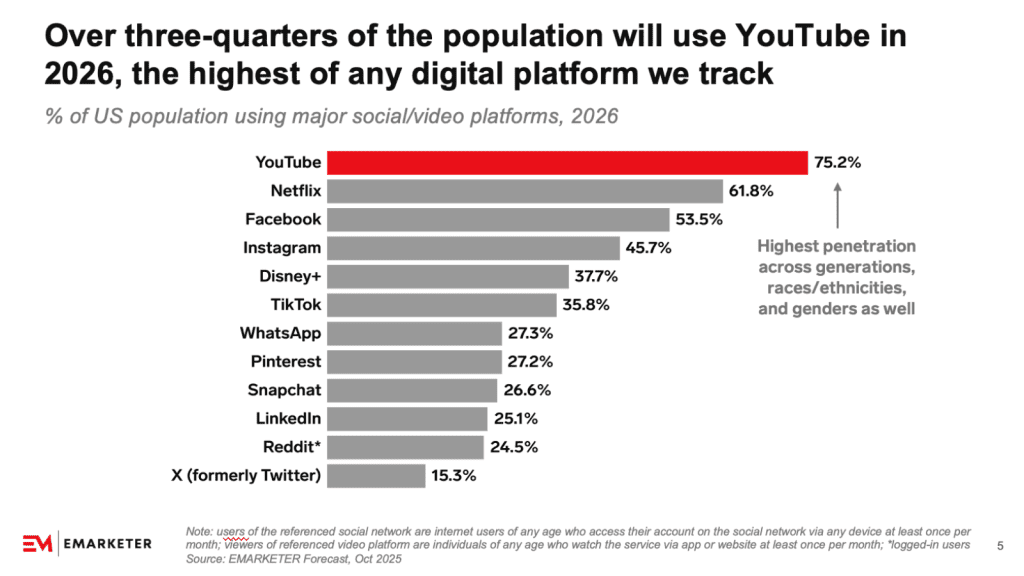
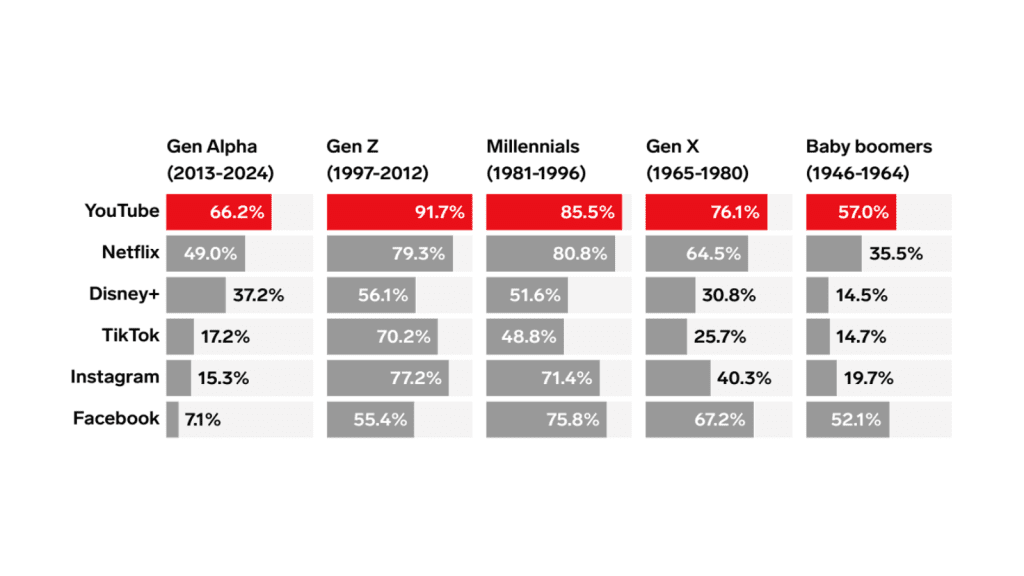
Jenny: Hi friends! Welcome to today’s episode of We Are, Marketing Happy, a Healthcare Marketing Podcast. I am your host, Jenny Bristow, and I am also the CEO & founder at Hedy & Hopp, a full service, fully healthcare marketing agency. I’m very excited to be joined today by our very own Miranda Ochsner, who is our Director of Paid Media.
Miranda, thank you so much for joining us. Something we love to do on this podcast is make sure that we’re keeping our listeners up to date on the way the landscape is shifting, and you shared some really interesting information on some paid media landscape shifts, during our Monday Morning Huddle. So I asked you to hop on to be able to update our listeners because I found it so fascinating.
YouTube has always been a very important platform. Really if you think like the last decade of doing marketing, right, YouTube has always been up there. But there have been some recent shifts in the way that YouTube has shown up through the lens of paid media. I’d love to hear kind of your thoughts about it.
Miranda: Sure. So, you know, when, I think we all love a good video, but we have to make sure they’re, you know, in the right platform and aligning with our audience and kind of, you know, kind of their everyday behaviors.
So, YouTube is the second largest search engine in the world. I believe the stats, alone for the US were about 75% of the US population is consuming YouTube in some fashion. Strictly YouTube, not YouTube TV just YouTube, which is a huge like, that’s a lot, right? That’s a lot of people. And it’s, you know, digging into a little bit of the data on it.
We learned through some of our eMarketer research that it’s the most watched streaming platform on TV right now. So think of those big streaming platforms, and YouTube is at the top. You know, it’s beating out Netflix. It’s beating out Hulu. Like those are really large platforms with large reach and audience. But we have this unique opportunity with YouTube specifically because it’s not just a video platform, right?
Like this is where people are going to learn and research. And honestly, you know, we call it like “Doctor Google,” right? It’s they’re self diagnosing maybe before they even talk to a professional of like searching symptoms or “what should I be looking out for” or whatever. And that’s really unique because it allows the targeting and measurement of digital, but also the reach of TV at the same time.
So it’s not like your local, you know, TV broadcast where it’s like adults 25-54. Like we’re really getting to hone in and buying all of those channels together based off of those behaviors. With that unique reach.
Jenny: Yeah. When you shared that viewership of YouTube, excluding YouTube TV, has exceeded Netflix, that really blew my mind, because you always think about the big streaming monsters, right?
Like Netflix is number one in my mind. Yes. So it really was a very interesting fact for me that it officially has surpassed it. And we will actually embed these eMarketer stats that we’re talking about in the blog post. And we’ll try to do it in the show notes. I don’t know if we can embed an image or not, but if for sure, we’ll be on the blog post on the Hedy & Hopp website if you want to actually see the numbers for yourself.
But it is quite significant how much YouTube gets for viewership.
Miranda: Yep, YouTube, like looking at this right now and we’ll share it out, obviously. But YouTube’s at about 75.2% and Netflix, it’s like 60%. So that’s a solid 15% higher than Netflix. And then Facebook is in the 50s. So it is such a significant difference between those different platforms and how we’re utilizing them and whatnot.
And what really makes YouTube so unique is this cross-generational reach. We also have this chart that we walked through, you know, looking from baby boomers to Gen A right now and the kind of really looking at that from, where they’re falling out within those streaming platforms. I’m looking I’m looking at the chart, our highest generations, if you want to call it that, for YouTube usage are Gen Z and millennials.
And that’s in the 90s, you know, low 90s, high 80s for Millennials. But we’re still above 55% for each one of those different generations. And then Netflix, Disney, TikTok, all of those fall underneath them. So it’s a really nice opportunity to hit cross generationally from a reach standpoint. But also where are they at within their journey?
You know, is it you know, healthcare is complex, right? We want to help, you know, simplify that a little bit if folks are doing their research and whatnot. So if they’re searching conditions, procedures, different options near them, whatever we want to be with, you know, we want to be with them on that journey and have a and have a video that’s able to connect with them and being able to hit them both younger and older is such a unique, just a unique approach from the standpoint of not every channel allows us to do that.
Jenny: Absolutely. And this chart where it broke it down by generation, was surprising to me about how massively YouTube beat out TikTok for, you know, Gen Z and Millennials. I again, and my head had some assumptions based off recent data, what I felt was recent data. So by last year or the year before about the acceleration of TikTok, and we have so many clients that are wanting to focus so much of their paid media dollars and really start thinking about that as a channel, but they aren’t even using YouTube yet, right?
So one of the things that we really try to push with our clients are thinking about media strategy is really understanding how we’re going to meet our patients, where they are based off the kind of content that we’re sharing with them. So while TikTok may feel like it is the next thing that you have to get on, it also requires a certain kind of video production.
Whereas with YouTube, you can repurpose different kinds of video that maybe feel more at home, like on Facebook or even more like a traditional TV spot, you know, like a 30 second or shorter that can live on YouTube and feel more organic. Whereas you could never do that on TikTok and have it feel in place at all. Right?
Miranda: And, you know, with YouTube, we’ve got these we’ve got these different approaches from a six second to a 30 second. I mean, it can keep going. We don’t ever push for too long of a video just because attention spans aren’t as long as they used to be on some of these. But there’s this teaser option, too, right, to get them to get them engaged a little bit more, or maybe take that next step, or if they see a 30, really watch the whole thing before they skip.
And there’s different ways that we can, really, just deploy from a link standpoint. But also, the fact is like they get to live on their YouTube channel, like you said. So organic and paid are working together, which is amazing, right? Like we want them working together in unison beautifully all together. And a lot of other platforms don’t offer that. That’s not even an option.
Jenny: And then another thing to think about, we covered this in a previous episode, but retargeting is dead in healthcare. The general concept of retargeting as a tactic. Right? Bur retargeting within platform, so thinking about YouTube, let’s say that we had a multi-part story or educational series that we need to educate folks on.
You can actually use retargeting within YouTube. So that way you can then share next episodes or a certain sequence to make sure that you’re delivering the content in the order that you want them to view it.
Miranda.It’s a nice spin on sequential messaging without retargeting.
Jenny: Exactly. Yeah, exactly. I love it. Let’s talk a little bit more about, how organic and paid can compliment each other on YouTube.
I want to share quickly, we did some work probably about five years ago with Saint Louis Children’s Hospital that I’m still very proud of, because what we did is we basically took the What to Expect When You’re Expecting concept and turned it into a social media concept. I love it, and, our point of contact that worked there at the time, in the marketing department actually got pregnant.
So we jumped on it and said, oh my gosh, let’s actually create a series where we can follow you along and we can introduce different providers, different procedures, kind of if you’re coming in for an ultrasound at your 20 week ultrasound, what does that experience look like? And really walk through and record it. And there were a bunch of tremendous successes organically.
As far as increasing viewership and subscribers and channel engagement, but was really interesting to me as we were able to repurpose that content, some of those videos being like two minutes long as an ad and people would watch the entire thing, or most of it before they did the skip button. So it’s very interesting to me of the different content types that you can try out, and the way that organic and paid can compliment each other on YouTube.
Miranda: And you can take those longer form videos, and to your point, snip them down a little bit and make it more of that multi series of what that kind of looks like and whatnot. But having that opportunity to, yes, organically reach and whatnot. But you know, they’re the paid side of it opens up a whole new lens of potential audience we might be missing.
Right? So with those two channel, sorry. Yeah. With those two channels working together, you’re maximizing your reach. And really hitting that audience that you want to hit all of the time.
Jenny: Yeah, absolutely, so as we’re talking about YouTube as a channel. Yes. And we’re thinking about CTV, OTT scale. How do you put YouTube in the overall consideration as we’re creating media strategies for our clients?
Miranda: That’s a great question. So, depending on the campaign. Right. Not video does not work for every campaign because of how goals and whatnot outlined. So we work really closely with our strategy team to truly understand, just like larger scale, what we’re trying to achieve, what those business goals. But from a from a media to how can media help support that?
So, depending on the campaign, we’ll jump into platforms like eMarketer or pull that research whatnot. But also, we, can pull from Definitive Healthcare as a platform that we utilize, and we can get really granular on different media habits, what they’re using, not using how often, what devices, all of the fun things that we media people can nerd out on.
And truly, you know, we really, truly understand who our patient is, what those behaviors are, what that makeup is, but also know it’s not going to be the same experience for every single person. But also when we recommend YouTube, if we’ve identified this is a really good fit, we know we’re looking at too from a paid search component because they’re all within that Google platform.
So how is the targeting working together while staying compliant? That’s a huge piece. Again, other platforms don’t always necessarily allow that. And you know, programmatically we can sometimes tie the data together. But also like there’s a nice little gray area on that that we have to be mindful of. But utilizing that, you know, from a keyword, content, custom audience build also with, the different custom segments within YouTube itself that we can layer on as part of that, like having those two work together is going to maximize our reach, maximize, you know, what that performance looks like.
Each channel has a different goal rate, but at the end of the day, it’s helping that larger media KPI that leads into that business goal.
Jenny: Perfect. Well, thank you so much, Miranda. I for our listeners, I know YouTube is not a new channel, right? This is a channel that we’ve had in our arsenal, but it’s 20, 25 years old at this point.
Miranda: I don’t know, I’m not that old, Jenny.
Jenny: I am! I’ve been in this industry for almost 25 years, and I think it’s been around as long as I have. So it’s been around this point.
Miranda:It’s been around 20 plus. Yeah. It has to be. Yeah.
Jenny: So I know that it isn’t something that’s always top of mind, but understanding how the viewership has really jumped up and where it falls in comparison with streaming channels and social media networks, hopefully will give you some additional consideration that if you’re not including it in your media mix, it’s something that you likely want to consider and start thinking about testing.
Because really, it is a big elephant in the room. Even though maybe it isn’t as sexy and exciting as thinking about something like TikTok or Snapchat or one of the newer ones. So. Well, thank you so much for joining Miranda. This is episode one of a little two part mini series we’re doing about media trends. So tune in next week when we’re going to talk about the shifting landscape and what to expect for the upcoming political season regarding media buying.
So thank you, Miranda, for tuning in. For our listeners, please, share this episode with any of your colleagues that you think would find it valuable. Please like and subscribe and we will see you on a future episode of We Are, Marketing Happy. Cheers.
Jenny Bristow, CEO & Founder of Hedy & Hopp, unpacks the state of the healthcare marketing agency landscape, which has evolved a lot in the past few years! It’s important to choose an agency that understands the nuance of your organization and the challenges healthcare marketers face. Jenny explores three different categories of healthcare marketing agencies and the types of offerings they provide.
Episode notes:
Finally, Jenny offers some advice to differentiate between the full-service agencies, which is to ask about an agency’s roots. Many started as creative agencies that added digital capabilities later. Hedy & Hopp was built on a strong analytics, compliance, and performance foundation, and later added strategy and creative services.
Connect with Jenny:
Email: jenny@hedyandhopp.com
LinkedIn: https://www.linkedin.com/in/jennybristow/
If you enjoyed this episode, we’d love to hear your feedback! Please consider leaving us a review on your preferred listening platform and sharing it with others.
Jenny: Hi friends, welcome to today’s episode of We Are Marketing Happy – A Healthcare Marketing Podcast. I’m your host, Jenny Bristow, and I’m also the CEO and founder at Hedy & Hopp, a full-service, fully healthcare marketing agency. I’m excited to come to you today on a solo cast to chat a little bit about the state of health care marketing agencies.
As most people know, if you’ve been kind of following along over the last couple of years, there’s been a whole bunch of M&A activity. There’s been a lot of acquisitions, a lot of mergers. And the landscape has shifted drastically from what it looked like a couple of years ago. So I’ve spent a little bit of time over the last six months really trying to evaluate, like, what’s happening now.
Who are the players? Who’s thriving in this new landscape? You know, and as a provider or a health system, if you’re looking for a new agency, kind of what are your options today? We’ve had, you know, a lot of folks in the industry, right now are shopping for new agencies. And so, if you are thinking about looking for a new agency or, you know, if you are just curious about kind of what the categorizations of agencies look like in healthcare marketing right now, this is a great episode for you.
So, first of all, I’m going to start with a general disclaimer that from an agency decision perspective, the first thing you need to decide is if you want a health care only agency. There are lots of massive agencies, big conglomerates in the WPP and Omnicom firms of the world. They may have a healthcare specific agency, but they’re part of a really large conglomerate.
Also, you could always go to a really large, you know, non-healthcare specific firm out of New York City, and be, you know, one of their only healthcare clients. But maybe you love the creative work that they do. That could be the right decision for you. On today’s episode, really going to talk only about those organizations that are focusing exclusively in the healthcare industry.
So from our point of view, with all of the different regulations and compliance things shifting in the landscape, most buyers today are really wanting to focus on organizations that understand all of the nuances and the different challenges that healthcare marketers specifically are facing. So that’s kind of the framework of what we’re going to be talking about. So if you are looking for an agency today, there we have seen oftentimes this pendulum where folks are wanting to go first to like a full service agency, and then the pendulum swings over and they maybe want to go to a performance agency or a specialty agency.
And it really makes me think of this Peter Drucker quote, that says in times of stability, you need management and times of uncertainty, you need leadership. And so as we’re thinking about the organizational decisions that may drive the decision of if you’re going to look to partner with a full service agency or perhaps a performance or specialty organization, it really comes down to what are you needing within your organization?
Do you need that strategic guidance to help lead you through uncertain times, or do you really feel like you have your strategy on lock, and you need really great execution partners. There is no right decision for everyone. It’s really going to come down to looking at yourself, your team, your marketing leadership within your organization and deciding, you know, where are you, you know?
And what do you want to do? Are you looking for a transformative change? Are you looking more to improve, you know, return on ad spend, and you’re wanting to get really tactical with what you’re wanting to execute. So that is kind of the big framework of how decisions, I believe are being made today. As far as what sort of organization folks are looking to partner with.
So we in our mind, really think about it as three different categories of agencies. I did an episode about 18 months ago that talked about the two different kinds of media agencies and its brand or performance. We had spoken with a lot of organizations that were looking for specifically a new media agency, and they were frustrated because their partner was really focusing more on awareness tactics and weren’t giving them any reporting that was helping them understand cost per lead, return on ad spend, or any of those more ROI-oriented data points.
The episode I’ve heard from folks really helped provide clarity around why that is. It’s not that that agency couldn’t do it. It’s just that’s not what they were built to do. They were really built to, you know, advertise for, you know, a BMW placement where it’s more about brand awareness, which is a great objective for some kinds of organizations.
So that specifically within paid media. But you can see that also across the broader spectrum for all of the different things folks are trying to accomplish. So the three different kinds of agencies that we see existing today that are healthcare specific are full service, performance, marketing and specialty. So when you think about full service, for us, the differentiator of organizations that we view as full service are those that focus on upstream strategy and branding.
Right. They’re still going to do often all of the same performance marketing tactics, but they have that upstream capability to help with things like, market research, persona development, kind of the, you know, who, what and why you’re going to market. It can help with messaging, positioning. So full service is a really great kind of agency to look for if you’re really needing to make some of those strategic decisions in addition to doing the activation work. Performance marketing, really focuses exclusively on patient acquisition and retention, usually only through digital marketing tactics.
So again, full service, more of that upstream strategy. But they also are going to have usually traditional media buying capabilities. Whereas a lot of the performance marketing agencies that are in market today and health care focused exclusively on digital, because they’re really focused exclusively on driving those appointments. And as we all know, billboards may be needed for brand awareness, but they certainly are not going to, you know, do a specific lift as far as the, you know, patients coming through the door or scheduling appointments.
And then the third category we call specialty, these are folks that specialize in content, specifically focusing on upstream research, direct mail website services. These groups are phenomenal at their craft, right? They exist and have existed for many years, often doing one specific kind of work. And so they are pros at it. These groups are great if you feel like you have all of your other marketing areas on lock, and you really need somebody to come in and dominate just on content, or you just are looking for a website rebuild, but you don’t need those broader agency strategic services.
There are lots of folks winning in this space. Just a call out a few of our friends–AHA Media, WG Content, Coffee Communications. Right. There’s a lot of folks that are really great specialists and phenomenal at their craft. And then of course, a fourth category, which is not an agency category, but it’s something that usually organizations are kind of shopping for.
Parallel path is tech solutions. So these are SaaS platforms. These organizations do not offer services. For implementation you will usually be required to do a lot of maintenance and ongoing work yourself. But think about, analytics compliant CDPs. So our friends over at Fresh Paint and Ours Privacy, those are great examples of tech solutions. Often you think about full service performance marketing or specialty organizations can partner with these tech solutions and have deep relationships like we’re great friends with Ours Privacy.
We share a lot of clients help do implementations for them. Lots of our clients use fresh paint. So often you’ll see those groups working in collaboration. And same thing with the specialty agencies. Like we have lots of clients that we share, you know, with some of those specialty agencies that I named earlier. So agencies working together is definitely something that you want to filter for as you’re doing your search back to the full service agency.
Lots of folks, when they’re going down the full service side, are kind of uncertain how to differentiate between all the different full service agencies. One thing that you always can ask is what are their roots in? Right. That’s kind of how you can understand how they were built, why they were built. Often their roots are in creative.
So they are a creative shop, have a creative founder, and then they, you know, added on digital capabilities maybe 5 or 10 years ago. And so they’re usually stronger on the creative side and maybe not as strong on the digital. Again, that is a mass assumption. They could bring in strong leadership to be able to make that side stronger.
But that’s kind of a general trend that you’ll see. Otherwise, groups like Hedy & Hopp, we actually are built with a foundation of really strong analytics, compliance, and performance. So I worked at Amazon previously, so I bring all of that data driven decision making into the founding of Hedy & Hopp, along with that strategy component. And now we’ve added creative over the last five years and really have made ourselves a great full service option for folks.
So again, there really is no right or wrong decision as your shopping agencies. But we’ve seen over the last couple of years that we’ve been in RFP presentations alongside competitors that maybe are like a tech solution alongside us presenting or a specialty group along with a full service. And they’re just such differences in who we are as organizations.
That it’s kind of confusing to us sometimes about why we are in consideration alongside one of these other groups, because our offerings are so vastly different and sometimes it’s because the buyer really wants to see and understand what each group can bring to the table, which totally makes sense, we love having those conversations, but sometimes it’s because they don’t understand the differences between the different groups and how to think about them categorically.
So if you are thinking about going into the agency, shopping, experience or the next couple of months or year, hopefully this episode was helpful to give you a little bit of a framework around what you should be thinking about, the kind of organization that you need based off of where your marketing group is within your, you know, life cycle and kind of what partnership you’re looking for.
So thank you for joining us for today’s episode of We Are Marketing Happy. If this episode was helpful, please share it with a colleague or friend. And please like and subscribe to be notified of future episodes. Thanks for tuning in. We’ll see you on a future episode of We Are Marketing Happy cheers!
CEO & Founder of Hedy & Hopp Jenny Bristow is joined by Senior Digital Producer Suzie Schmitt to discuss a real-world example of AI and automation in healthcare content marketing: the creation of Hedy & Hopp’s in-house tool, Hoppywriter. They explore the tool’s purpose in increasing efficiency and quality for healthcare marketing blogs, the technical and ethical considerations in its development, and how it ensures humanity remains at the center of content creation. The conversation highlights practical applications of AI to enhance—but never replace—human writers and the efficiency of their processes.
Episode notes:
Connect with Jenny:
Email: jenny@hedyandhopp.com
LinkedIn: https://www.linkedin.com/in/jennybristow/
Connect with Suzie:
LinkedIn: https://www.linkedin.com/in/suzie-schmitt/
If you enjoyed this episode, we’d love to hear your feedback! Please consider leaving us a review on your preferred listening platform and sharing it with others.
Jenny: Hi friends! Welcome to today’s episode of We Are Marketing Happy – A Healthcare Marketing Podcast. I’m Jenny Bristow, and I am your host, and I’m also the CEO & Founder at Hedy & Hopp, a full-service, fully healthcare marketing agency. I am so excited to be back with y’all! After a little short hiatus, we took a little bit of a break from producing new podcasts at the beginning of this year, and we’re excited to be back online and sharing some fresh content with you.
And with that, I’m really excited to welcome our very own Suzie Schmitt. Suzie is our Senior Digital Producer here at Hedy & Hopp, and she does a lot of the magic behind the scenes in the work that we produce. So welcome Suzie.
Suzie: Thanks, Jenny. So happy to be back.
Jenny: So what we’re going to talk about today is an example of AI in action.
So, so many organizations, so many podcasts, so many blog posts are out there talking about how you got to use AI in marketing. And at this point, it just kind of feels like noise, right? They all are kind of saying the same thing. None of them are giving real world examples besides really basic prompts, you know, that are having you kind of have the the platform do the things that we believe humans should be doing.
So we take a very different approach about how we think about and leverage AI and automations and we really want them to enhance the human output. Right? We don’t want them to replace it. We want to keep humanity at the center. So we built a tool called Hoppywriter. Leave it to Suzie to always have really fun names for the tools that we produce.
But Suzie, walk us through what the copywriter is and why we felt last year that it was something important for us to build.
Suzie: I would love to. So the Hoppywriter was born from a couple of issues. One of them was just the ridiculously intense nature of producing health care content. When you’re producing healthcare marketing blogs, they are held to a much higher standard of factuality than most other industries, so we have to be really careful about that.
It’s, if you’re working with like an orthopedic clinic, for example, it can be hard not to get repetitive about a specific joint replacement or something like that, and it can just be kind of difficult to continue to brainstorm fresh content and also come at it from the viewpoint of somebody actually experiencing those two conditions or symptoms. So what we did is we created a tool that—what it does, is it streamlines the delivery process of our blogs by empowering our writers to have everything they need in one spot at their fingertips.
So it’s built in a Google Sheet, with using a Google App script as the full back end, which is just kind of a different flavor of JavaScript. But it also integrates several of our other tools. So when we were talking last year about how we could be more efficient in writing our blogs, how we could increase the quality, how we could make sure that we are keeping all the topics to be the best interest of the client, both in what they’re currently offering and and what can boost their SEO the best, we realized that we were spending a lot of time just getting the writers the information that they needed just to get started. So hey, here’s your focus keyword and here’s some other areas we want to touch on. Here’s some specific requests from the client. And we realized that we could be a lot more systematic about that. And so we were.
So essentially what the Hoppywriter does is it integrates several tools. The first thing it does is it pulls in all of the keywords that we have flagged as needing work for our clients, for our SEO retainer clients, so that we can make sure we’re focusing on the most high-value keywords possible. Then the writer has those right there in the spreadsheet with all their other, all the other information about that client, the voice they like to use, the doctors who do the specific treatments, the different awards they’ve won, what sets their clinic apart from others.
Everything is right there in one spot. You can reference with that real time data. And then we have different templates within our project management system, Wrike, that are for different approval processes and different clients have different, you know, everybody’s different. There is no one size fits all. So by setting all of that up at the front end and just being very organized, we can then pull in additional information for our writers and then push it to our project management software with an already fleshed out brief for the writer.
So then what we’re getting is we’ve got lots of human touchpoints that all of this, which is something I want to always stress, is that this is something that it’s not a button we push and it just happens. It’s you push a button and something happens. You do something with that, and then you push a button and that gets pushed somewhere else.
So it’s really much more of an efficiency pipeline than anything else. But, it’s cut down our time that it takes to edit and to write our blogs. It has resulted in content that our clients have been happier with, and that’s been even more effective in SEO, because we’re able to take a pretty prescriptive approach with the way that we’re structuring the content.
Our incredible SEO specialist, Yenny Rojas, I’ve gotten to work with her extensively on how we can set this up to give you the best outputs possible when it comes to, suggesting topics for the writers and then the content within that. And it’s been a really fun tool to work on, with, our creative writing team, who I normally don’t get to spend a lot of time with.
And it’s been great to hear from them what’s going wrong, and then say, hey, I built something that I think might be able to help you out with that, and then to see those real results, both for us and our clients.
Jenny: Yeah, I love it, Suzie. What I was so proud about when y’all have been going through this process is that at no point did we try to replace the brilliance of human interactions with AI.
It was all about efficiencies. Making less clicks for the humans, getting the information the humans needed front and center. So it’s really a beautiful way to make sure that we’re never thinking that human work could be or should be replaced by AI or automations. On that: Talk about the guardrails as you were thinking about in building this tool. What are some guardrails that you had to keep in mind as we were fleshing it out?
Suzie: Absolutely. So AI is one of the tools that’s used in the Hoppywriter. And we just evaluated it the same way we use all of our tools. So we stress tested it. We used edge cases. We gave it crazy prompts to see how it would react. We gave it every different situation we could think of to make sure we weren’t going to get any weird, crazy, unexpected results. And we also made sure that our data was completely safe and the data of our clients. So as we’ve talked about, we have a nice little Gemini ecosystem that’s in our Google Cloud account, covered by a BAA, and is never used to improve the models, and it never leaves our data silo.
So that’s a specific thing about AI that I, that made me feel comfortable using this for, where I would not feel comfortable using something where our information is not siloed.
Jenny: I completely agree. And just for full clarity, of course, PII and PHI is never put into the Hoppywriter even though we have a BAA, right?
Suzie: No.
Jenny: We’re not talking about any patient specific information here, but we still want to make sure that we have that legal agreement in place just to make sure that we’re as covered as possible with all of our information.
So let’s talk a little bit—
Suzie: We own all our data:
Jenny: Yes, exactly. Let’s talk a little bit about the Jaccard Index.
Suzie: I would love to talk about the Jaccard index. So the Jaccard index is a metric of similarity between objects. And it’s been used a lot in machine vision actually. So detecting stop signs is one of the most blatant examples of the Jaccard Index for, cars that can see those.
But what we’re using it for is another to treat another symptom of writing content for health care, which is it can get pretty repetitive. As you may imagine, an orthopedic clinic that offers three different types of joint surgeries, that content might start to feel a little bit same after a little bit. So what we’ve done is we’ve introduced a Jaccard Index threshold for each client, and sometimes even each campaign.
We have a lot of control that we do to again, none of our clients are one size fits all, so we want to make sure we can tweak it and make sure everybody’s getting the best outlook and output. But what it does is it compares how similar two objects are. And it works perfectly with something like text, because it takes the size of the content as well as the count, the actual content itself, into regard when it compares those two objects.
And so we have a system in place for that automatically flags any topics that are too similar to anything we’ve written about in the past. And then even further beyond that, if we have something on this blog that hey, this paragraph, we basically said something, it’s basically paraphrased from something four months ago. That’s something we want to be aware of, and that normally it would be so time consumptive to have a copy editor or somebody, you know, go back through months of medical blog posts to make sure we’re keeping it fresh, so we’ve also …
Jenny: If it’s even possible, right?
Suzie: It really, it’s not sustainable. So it’s something that’s given us a much better insight to our and just the way our copy needs to be while staying excellent for humans and excellent for search engines. And it’s been a really fun tool to use, to make sure everybody’s getting fresh content that resonates with their audiences.
Jenny: I love it. So it’s been a huge win for our SEO and GEO clients. We work with hundreds of providers across the country, helping them optimize their digital ecosystems with fresh content, more structured content, etc. For other organizations that may be thinking about embarking on their own sort of initiative, what are, what should they be thinking about as they go down that road?
Suzie: Think about the tools you already have. So most of these tools, all of them, we already had them. We didn’t purchase any software for this project. I, I will always say that the power of a Google App script is much more in reach than it might seem, and if you watch a couple tutorials, you might be surprised by how much you can start cleaning stuff up and how much you can start connecting stuff.
Always keep your API keys in the secrets—don’t ever put those out there. Somebody else will find it and rack up an enormous bill in your account. And just make sure that you’re approaching these all with the same lens. I think it’s really important, the way that we approach AI is the same way we approach a web hosting provider, a antivirus software, they all have to meet the same fundamental requirements for it to be an acceptable tool for us to use in our work. And if you can’t find a way to do that, then it’s probably just not quite there yet. But also it’s growing fast and it probably will get there. Yeah, I’d say the power of integrating your softwares together—huge. An absolute force multiplier. And for me, it it’s just great to keep our writers writing and not waiting for dashboards to load. So …
Jenny: Exactly, exactly. Humans center. Right? I would really encourage anybody, as you’re thinking about incorporating additional technologies or AI technologies, please continue to keep the humans center, to all of this, because that’s really, you know, we’re in the business of human connection and health care. So making sure that we’re continuing to advocate for that is really important.
Suzie: 100%. And again, this is not replacing our copywriters. We have full time copywriters that write beautiful copy. And …
Jenny: Exactly.
Suzie: So grateful for them to teach me from a technical standpoint, all of the incredible thought that goes into the content they create, it’s really amazing. Thank you.
Jenny: Totally agree. Thank you so much for joining us today, Suzie. For our listeners, I hope this gave you maybe some fresh ideas about ways you could incorporate AI automations and process improvement into your marketing technology stack and the way that your team operates. Whether you’re an in-house team or a fellow agency, there are really smart ways that you could incorporate and the technology like Susie said, is just continuing to rapidly accelerate. And if you ever want to nerd out and just talk about potential solutions, or ideas, give us a call. We love talking about this stuff and ways that we can make everybody in the healthcare marketing space thrive, so. And with that, thank you so much for joining us today.
Please share this episode with a friend or a colleague that may find it interesting. And give us a like and a follow so you’ll be notified about future episodes as they drop. Have a great rest of your day and we’ll see you on a future episode of We Are, Marketing Happy. Cheers!