We’re celebrating a significant milestone at Hedy & Hopp. We’re proud to announce that our Senior VP, Maggie Piasecki, has officially become a minority owner of our woman-owned healthcare marketing agency as of August 8! This milestone perfectly coincides with National Happiness Happens Day, highlighting the joy and impact Maggie has brought to our team.
Since Piasecki joined forces with our CEO, Jenny Bristow, three years ago, she has played an important role in our transition to work exclusively with healthcare organizations. With the announcement, we’re not only marking a key moment in our journey but also looking forward to a bright future together.
Read the full press release below to learn more about this exciting development at Hedy & Hopp. Book time with Jenny (Hedy & Hopp’s CEO) for additional questions.
Contact: Jenny Bristow – Jenny@hedyandhopp.com
Aug. 8, 2024 (St. Louis, MO) – Hedy & Hopp, a woman-owned healthcare marketing agency, announces that Senior Vice President Maggie Piasecki has signed on as a minority owner of the company, effective August 8, 2024. This date holds special significance as it marks three years since Piasecki joined CEO Jenny Bristow to pivot the company’s focus entirely to healthcare and two years since the launch of the Hedy & Hopp brand.
“Maggie’s journey with Hedy & Hopp has been nothing short of transformative,” said Jenny Bristow, CEO and Owner of Hedy & Hopp. “Her leadership, passion, and dedication have been instrumental in our growth and success. Having her as a minority owner is a natural progression and a true reflection of her impact on our company. I couldn’t be happier to continue this journey with Maggie as an owner and partner.”
Maggie Piasecki, who has been with Hedy & Hopp since August 2021, has played an important role in the company’s evolution. Reflecting on this milestone, she shared, “Becoming a part-owner of Hedy & Hopp feels like the culmination of a journey that started many years ago. I’m deeply honored to solidify my commitment to the agency and continue shaping our future alongside Jenny and the impactful team we’ve built together.”
Piasecki’s history with Bristow dates back nearly two decades, working together at a healthcare recruiting company. Their professional paths separated but always seemed destined to intersect again. In 2021, when Bristow bought out her business partner and sought to rebuild her leadership team, Piasecki was the first call she made. Piasecki’s proven success in building agency teams and her experience in healthcare marketing, enabled Hedy & Hopp to successfully rebrand and restructure the agency in healthcare. As a result, the agency gained dozens of healthcare clients and expanded their capabilities to full-service. Together, Piasecki and Bristow have been a driving force behind Hedy & Hopp’s success, embodying the company’s core values of kindness, positivity, good intent, and owning the solve.
About Hedy & Hopp
Founded in 2015, Hedy & Hopp is a full-service, fully healthcare marketing agency. The company helps healthcare organizations tackle their biggest marketing challenges with full-service solutions that bring the results — and the joy. Hedy & Hopp is an SBA-Certified Woman-Owned Business and was named a 5-Star Workplace in 2023 by St. Louis Small Business Monthly. Bristow was also named a Top Women Business Owner in St. Louis by St. Louis Small Business Monthly. Learn more at HedyandHopp.com.
# # #

In today’s episode, Jenny welcomes iHealthSpot Director of Practice Marketing, Bill Riley, to share some very exciting news that will advance the offerings of our agency—Hedy & Hopp has acquired iHealthSpot. iHealthSpot is a healthcare marketing agency that specializes in helping local providers establish and grow their marketing footprint to increase brand awareness and drive patient engagement. At Hedy & Hopp, we work with more regional providers and payors, so this acquisition gives us the capabilities, processes, and technologies to serve smaller groups, expanding our impact to improve how patients find and access care through smarter marketing campaigns.
During the episode, Jenny and Bill discuss:
Connect with Bill:
Connect with Jenny:
If you enjoyed this episode we’d love to hear your feedback! Please consider leaving us a review on your preferred listening platform and sharing it with others.
Jenny: [00:00:00] Hi, friends. Welcome to today’s episode of We Are, Marketing Happy, a healthcare marketing podcast. My name is Jenny Bristow. I am your host, and I’m also the CEO and founder at Heddy & Hop. We’re a full service, fully healthcare marketing agency. And today we’re coming with a really big, exciting announcement.
This has been posted all over our socials. We want to do a podcast episode specifically on it because we’re just super jazzed about it. And with that my guest today is Bill Riley. Welcome Bill.
Bill: Thank you, Jenny. Great to be here.
Jenny: So the exciting announcement that we’re making today is that Hedy and Hopp has acquired another healthcare marketing agency. So that agency is iHealthspot and we are super excited about it. I’m having Bill on today to chat a little bit about his perspective of the acquisition. Bill ran iHealthSpot, and he’s joining Hedy [00:01:00] & Hoop to continue running the practice marketing business under the Hedy & Hopp umbrella.
So I wanted to start by kind of backing up a little bit. I’m talking a little bit about the three different ways an agency can grow. Cause I think it’s really important if you’re not in the agency space, you may not have the perspective of like, how does an agency grow besides you just landing new clients?
What does that look like? And really there are three different ways agencies can grow. The first one is new business sales, right? Like brand new organizations you’ve never worked with before coming in the door, wanting to work with you. And we have Hedy & Hopp has killed it with that this year. We have over 15 significant new clients coming on board this year.
Actually that’s a couple of months old. I think it’s higher than that now. But we’ve done a really good job with onboarding net new clients. The other way is organic growth and client retention. Hedy & Hopp is also excelling in this space. We have 88 percent client retention over the last four years since pivoting to healthcare [00:02:00] exclusively.
That is a very high percentage. Especially when you take into consideration that some folks just come to you for a one time project and they’re included in that calculation. So we are really proud of that 88 percent retention. The other way, the third way, and what we’re talking about today is growth through an agency acquisition.
This is something that has been really on our radar is something we wanted to tackle, maybe next year or a year down the road, but it was not something we were actively thinking about right now. However, an agency would do an acquisition of another agency if they’re trying to add a service line. Or a capability or add customers or revenue.
And for Hedy and Hopp, this acquisition really made sense on both sides. Bill and I actually met at the HCIC conference. He attended my session about HIPAA and immediately came up afterwards and said he loved hearing about the topic and we’ve, you know, stayed in contact ever since and that kind of is how that acquisition [00:03:00] came to us.
We were not out actively hunting to buy an agency. It really just organically came our way. At Hedy & Hopp our five areas of passion as far as the kinds of clients we love working with are regional providers, regional payers or health insurance companies, pediatrics, oncology, and reproductive health.
And Bill, I’d love for you to chat a little bit about iHealthSpots area of focus, because it really, if you take our regional providers bucket, it really is exciting how deep it’s going to allow us to go from a client base and area focus perspective.
Bill: Yeah, thanks, Jenny. I think it’s a beautiful fit between the two agencies.
Generally speaking, broadly speaking, Hedy & Hopp has, let’s say, fewer clients in the grand scheme of things, but these tend to be much, much larger organizations. Where as iHealthSpot is very much the [00:04:00] opposite. There will be several hundred clients that we will bring transition over to Hedy & Hopp.
Majority of these are very small, like, like single location practitioners or specialists or what have you. There are some, you know, multi location clients. We have some regional hospitals, but the vast majority are smaller ambulatory practices. We have a number of primary care, probably 15 percent of the base are primary care related clinicians.
The majority are specialties. Those that, if you think about. Don’t have direct line of sight to the patient or they don’t own the patient is not necessarily attributed to them. So these are organizations that really need to lean into marketing to accelerate their patient acquisition efforts. In many ways, you know, we’re healthcare [00:05:00] only just like Hedy & Hopp but in so many ways many of our tiny clients will behave from a marketing standpoint are behaving just like a local retailer in a town or in a neighborhood or whatever.
Jenny: Yeah, that’s a really great point. And I think it’s the timing is just so interesting because over the last 18 months, we’ve had a large number of groups just like that come to us and want to work with us. But our people, processes and technology are really built to service larger organizations. So for example, our clients that come to us have media budgets of hundreds of thousands on the low end, up to like five to 10 million plus annual, right, because they’re statewide or multi state.
And so it’s really difficult to just take that and shrink it down for one location. So we were actively building a small practice marketing service, like a division when you approached us. So I’m really excited that we’re going to have the opportunity to both continue to service [00:06:00] those larger groups, and then also appropriately service the smaller ones, helping them really focus exclusively on patient acquisition and getting those new patients through the door.
Bill: Yeah, it’s a great point. And, you know, in many ways, The nuts and bolts, the blocking and tackling of digital marketing is often the easy part. What, where we do a lot of work, especially with a new client is around just education, you know, at a larger organization, a larger enterprise they will have some sense of a marketing organization or marketing team that is responsible for the branding and the presence and awareness of that institution.
When you’ve got a tiny orthopedic practice or dermatology practice, they don’t have the wherewithal to do that. So we’re you know, we’re often working with the physician owner themselves or the office manager and you know, just like any discipline, there’s a vocabulary and there are [00:07:00] acronyms and, you know, this is something that we learned from early on it’s very easy to talk past each other.
You know, if you start throwing around all these words about PPC and SEO and keywords or keywords with a long tail, you know, people get kind of frustrated and they don’t know, right. So part of the process, a huge distinction between a large enterprise and a tiny practice is just, first of all, helping folks to understand what all the digital channels are, assessing who they are and how they fit in their local neighborhood with patients, with other competition.
And then, you know, not just evolving a strategy, but just helping them to understand teaching along the way is a big thing that we try to do for the smaller clients.
Jenny: Yeah, absolutely. I think it’s kind of interesting because I’ve had a few episodes about this, but the heart of [00:08:00] Hedy & Hopp truly is education also. Right, cause even at the larger size, they also need education, but it’s usually a different kind of education. Right. But like at the heart of it, if you’re truly a smart and joyful, I will say marketing agency, educating your client and bringing them along for the ride. As far as actually understanding what your strategy means and what you’re executing is such a big part of it for relationship building and helping them just be successful.
So awesome. Well, what I’d love to talk about then is our transition strategies. So, like you said, there are hundreds of my health spot clients. There are, I believe around 450 coming over, so quite a significant client base. And so what we’re planning to do is we’re actually going to continue. Bill is going to continue running our practice marketing business formerly known as iHealthSpot, keeping the health spot branding for now, but he’s going to continue running that business.
Most of the teams are coming over. So same faces, same processes, same technology, nothing is changing. Same thing with Hedy & Hopp. All of our clients [00:09:00] can continue having the same team members, same processes, same everything. And then over the coming months, we’re going to be looking at understanding how can we combine teams?
How can we begin offering some of those technologies that we offer larger groups to those smaller groups and vice versa? I personally was really passionate about building a business unit to be able to service smaller groups because I’m very passionate about improving patients’ access to care and the ability to find the care that they need.
And often that isn’t necessarily through large groups. Sometimes it is, like you said, like the orthopedic group on the corner. And so having the ability to service both appropriately has been really near and dear to my heart. So very excited about this.
Bill: Yeah, agreed. And just to Emphasize your point, I’d say our number one focus is making this transition for our clients as seamless and as simple and easy as possible. Jenny, like you mentioned, that the same staff that is delivering the [00:10:00] services. The same faces, the point of contact for our clients, the same help desk staff, all coming over along with all of the underlying infrastructure.
So, for clients that have websites with us or other marketing services, social media, paid ads, you know, listings, reputation management, what have you, all of that infrastructure is coming over as well. So we plan for as simple and seamless a transition as we can.
Jenny: I love it. I love it. And Bill I would love to hear just your perspective of company fit because I mean, I have my perspective, but I’d love to hear more about your thoughts as you’ve met the Hedy & Hopp team members and just learn more about, you know, our organization and the cultural fit between the two groups.
Bill: Yeah, no, this one to me is a pleasure to answer. You know, you can look at, you can look at things, opportunities like this from a few different dimensions, right? You can look at, of course, we’re in the same vertical industry, and then we look at [00:11:00] segments of clients, and there’s some overlap there, there’s some adjacency there, so that’s a great opportunity.
We can look at synergy between services, right? I’m excited because there are a number of services offered by Hedy & Hopp that we’ve not figured out or we don’t offer. And we’ve been asked for and I think the same is true with respect to eye health spots. So, okay, that’s interesting.
But to me at the end of the day, it’s about the people, right? The product here from our combined teams. You know, the product is the people and the people delivering the services, the people being the point of contact for the customer, being the advocate for the customer.
That’s really in my view, what makes or breaks a successful client and client relationship. So, easily what I’m most excited about is what I see is wonderful alignment and just cultural fit between our team [00:12:00] at iHealthSpot coming over and joining Jenny, you know, yourself and the rest of the team at Hedy & Hopp.
It’s wonderful. Everything I’ve seen is focus on teamwork. It’s a focus on being positive. Of course, there might be challenges or issues that come up. Of course there are. But you know what? We’re going to roll up our sleeves. We’re going to work together. We’re going to help each other out.
We’re going to celebrate the success and then we’re going to go on to the next one. That’s something we’re very passionate about and I see if not the same, perhaps even more from Hedy & Hopp. You know, we had other, I will say, there were other avenues that iHealthSpot was considering, and Hedy & Hopp was by far the best fit, and I would say the cultural alignment is the highest priority in my mind.
Jenny: I love it. Well, Bill, welcome to Hedy & Hopp. We are so excited to have you in the entire iHealthSpot team members as [00:13:00] well as clients on board and really look forward to just a super exciting future together.
Bill: Thank you, Jenny. Let the adventure begin. Thank you.
Jenny: And for all of our listeners, if you have questions about our expanded capabilities, or if you’re a smaller group, who’s been wanting to work with Hedy & Hopp, but perhaps didn’t know if your budget would be a match now’s the time to reach out. Give me a call or an email at jenny@hedyandhopp.com and we would love to chat with you, but thank you again for tuning in, please give this podcast rating, give us a review of subscribe and let us know if there’s any topics you’d like for us to cover in the future until next time.
Thanks for tuning in to this week’s episode of We Are, Marketing Happy. We’ll talk to you soon.
We are thrilled to share that our CEO and owner, Jenny Bristow, has been featured in Inc. Magazine! The article, “This Entrepreneur Had a Major Stroke at 39. While She Recovered, Her Business Didn’t Miss a Beat. Here’s How,” highlights her incredible journey and the challenges she faced.
In the article, Jenny talks about her major stroke at 39 and how she overcame it, showing her strength and leadership. She credits advance planning with saving the company during this tough time.
This recognition by Inc. Magazine is not just a personal achievement for Jenny (she has been reading Inc. Magazine since she was 20!) but a significant milestone for our company. It reflects our commitment to excellence and our impact on our industry.
We invite you to read the full article and join us in celebrating this incredible achievement. Together, we continue to strive for joy and make a difference!
Read the full article on Inc. Magazine (login required).
Thank you for being a part of our journey!
Do you want your marketing talents to make a difference in the world? Join Hedy & Hopp, where we are focused on improving patients’ experiences finding and accessing healthcare.
We’re excited to be hiring for THREE positions!
Who is Hedy & Hopp?
Rated one of the fastest-growing companies in St. Louis for two years in a row, Hedy & Hopp is a full-service, fully healthcare marketing agency.
At Hedy & Hopp, we believe that a healthcare brand’s first opportunity to have a positive impact on a patient’s experience starts just as soon as the patient begins a search for a provider or healthcare information. This is the key moment a brand can begin to make a connection with a patient. And we do this with clients and employees who share our passion to improve access to healthcare in an environment of joy and positivity.
Hedy & Hopp offers a competitive base salary plus profit-sharing plan, as well as an employer-paid benefits package and a 401(k). We also offer a generous PTO allowance plus half-day Fridays year-round (we close at 1pm CT).
Our Core Values:
Our organization provides a unique environment where work life balance is not one size fits all and where people can show up as their true self, each and every day.
Back from their final conference of the year, Jenny Bristow, Shelby Auer and Julia Pitlyk of Hedy & Hopp share their highlights from the 2023 HCIC conference in Los Angeles. They discuss various sessions and speakers, including the patient privacy masterclass with Hedy & Hopp and Cincinnati Children’s, several sessions on new marketing channels for hospitals and health systems (like TikTok!), what they learned about marketing technology stacks to enable personalized patient experiences, and ways healthcare marketers can better collaborate cross-functionally. They also speak to the importance for healthcare marketers to lean into each others’ experiences, share their learnings, and work together to help healthcare marketing advance and innovate as an industry.
Connect with Jenny:
https://www.linkedin.com/in/jennybristow/
Connect with Shelby:
https://www.linkedin.com/in/shelby-wanne/
Connect with Julia:
https://www.linkedin.com/in/jpitlyk
Connect with our favorite HCIC 2023 speakers and resources:
Houston Methodist “Find A Doctor” Tool
https://www.houstonmethodist.org/find-a-doctor/
Aaron Williams, Cincinnati Children’s Hospital
https://www.linkedin.com/in/aaron-williams-969a4b11/
Steve Coates, Hartford HealthCare
https://www.linkedin.com/in/steve-coates-9565449/
Jody Ganschinietz, Nationwide Children’s
https://www.linkedin.com/in/ganschinietzj/
Callista Dammann, Nationwide Children’s
https://www.linkedin.com/in/callistaconzett/
Matthew Mader, Broward Health
https://www.linkedin.com/in/matthew-mader-4092423/
Carla Rivera, Broward Health
https://www.linkedin.com/in/carla-rivera/
Val Lopez, Baptist Health
https://www.linkedin.com/in/vallopez/
Kier Bradshaw, MERGE
https://www.linkedin.com/in/keirbradshaw/
Linda Ho, UCLA Health
https://www.linkedin.com/in/lindavho/
Priya Sreedharan, UCLA Health
https://www.linkedin.com/in/psreedharan/
Cristal Herrera Woodley, Renown Health
https://www.linkedin.com/in/cristalherrera/
Alex Nason, Frederick Health
https://www.linkedin.com/in/alexander-nason-b47b462/
Alec Endara, Baptist Health
https://www.linkedin.com/in/alecendara/
Mary Kay Boitano-Nelson, Houston Methodist
https://www.linkedin.com/in/marykayboitanonelson/
Tom Price, Houston Methodist
https://www.linkedin.com/in/tmprice/
David Feinberg, Mount Sinai Health System
https://www.linkedin.com/in/david-a-feinberg-57746a5/
Chloe Politis, Mount Sinai Health System
https://www.linkedin.com/in/chloepolitis/
Tara Nooteboom, UCI Health
https://www.linkedin.com/in/tarajnooteboom/
Episode Transcript
Jenny: [00:00:00] Hi friends, welcome to today’s episode of We Are, Marketing Happy – A Healthcare Marketing Podcast. I am Jenny Bristow. I am the CEO and founder at Hedy & Hopp, a full-service, fully healthcare marketing agency. I am so excited to be joined again today by Julia Pitlyk, Hedy & Hopp’s Director of Marketing and Shelby Auer, one of our account managers.
Welcome ladies. So we just got back from a super, super, super fun HCIC. It was in LA this year. It was super jam packed and I’m excited to do a fun recap episode with y’all.
Julia: Yeah, absolutely. Had such a good time. So many learnings. It’s been hard to cram them all into a short little episode, but we’re going to do our best.
Jenny: Perfect. So let’s start with a brief chat about the masterclass that I did along with one of our dear clients, Aaron Williams of Cincinnati Children’s. It was a 90 minute presentation masterclass [00:01:00] specifically on HIPAA, FTC, and state laws, what you need to know now. And I feel like this is the end of our 2023 road show on privacy, but it was again, standing room only.
We had phenomenal attendance and I’m so proud of Aaron as a co-presenter about the level of technical detail he got into during not only the presentation itself, but also in the Q&A at the end. We had some really specific, technical questions that folks got into as far as the laws and how they actually were interpreted from a technical perspective and then implementation options, but he killed it.
Julia: Couldn’t agree more. You both did an amazing job. I think what’s funny about the roadshow comment, before we get to Aaron, is that we’ve been on this roadshow and the title has been what you need to know now, and the content has changed and evolved every time because this topic is changing and evolving week over week.
So I think that’s been a [00:02:00] really, it’s been fun. It’s also been crazy to continuously update that deck, I know, for you and your talking points as new points of view, as new sorts of policies and perspectives come out regarding all of these changes. So I think it’s just, it’s very interesting how much we’ve had to update this over the past couple months.
But yes, I think this is probably the session, probably because of the masterclass nature, where we had such a good Q&A, and you’re right, really, really specific questions and also really specific answers from the both of you. I love sessions where you don’t get answers that are “it depends,” which it often does depend, but Aaron, because he has gone through this journey with us, has been implementing server side Google Tag Manager, has been was able to really get specific on pros, cons roadblocks, watch outs when it comes to implementing and also provided some really great sort of philosophy on how they’re navigating privacy as a whole.
Shelby: Yeah, and I thought it was, as we were walking into the session, I know [00:03:00] that Jenny, you and Aaron were even talking about new pieces to the equation as of a week ago. And so I agree with the content constantly evolving. It just, it goes to show, even after we talked about a similar topic at the conversations that we were having with folks this time around and where they’re at in the journey even differs from just a couple months ago. And so being able to have those more in depth conversations with folks that are in, in the thick of things and trying to figure out where to go from here. Yeah. Lots of good conversation and yeah, you and Aaron did such a good job.
Jenny: Well, thank you. I think for me, it was particularly entertaining.
We had a couple of people come up to our booth afterwards later in the day or the next day and say, I feel like I finally understand technically why this is a problem and how to solve it. But then they went to another session right after and they said they could still do what a lot of the things that we [00:04:00] said you couldn’t do!
And so, I think it’s really interesting how the education and information and understanding within the industry is still evolving so quickly. And so I’m glad that we’re able to be a beacon of education, if nothing else, within the industry to help folks understand how it’s all working.
Julia: Agreed. We did a roundtable on this topic, too, during lunch, I think on Tuesday, and same, same thing. People were so grateful for just the clarity and the education and yeah, session by session, some of that clarity was becoming murky again. But, that’s where we were really able to have some rich conversations on both analytics set up, tagging and tactics.
From an activation standpoint, you had so many good questions in your masterclass around how this impacts creative. We heard a lot around: if we’re doing contextual advertising in the platform, can we put out some creative about a mammogram or a certain type of service line?
So it’s been cool to see how – cool is maybe not the right word – but how much [00:05:00] this is impacting the different aspects of marketing. I guess it’s cool to see once people get it, how they’re starting to ask deeper level questions to figure out where their guardrails are within their organization.
Shelby: And I loved there were certain individuals like digital strategists or folks who aren’t necessarily in the weeds of these conversations that attended the masterclass and were able to be like, okay, I feel like I have a better understanding and I hear what my colleagues are dealing with and I can have an educated conversation and understand why we’re going through this process.
So it was really neat to see how that education was impacting, hopefully, the future conversation teams are having.
Jenny: Absolutely. Well, let’s talk a little bit about some of the other favorite sessions that we attended. So we did a divide and conquer strategy like we do at all conferences that we attend. So, we attended a bunch, but we want to highlight a few of our favorites.
So Shelby, I know you attended the session around innovative channels for health systems, specifically talking about podcasts and TikTok [00:06:00], which is a conversation we have so often with clients and prospects. Tell me a little bit about what you learned.
Shelby: Yeah, so, honestly, I ended up attending, like, three different sessions on all of these different topics, and it was really, really interesting, one, talking about the power of podcast ads.
So, Steve, who’s the Senior Director of Marketing at Hartford HealthCare, he actually used to be a radio host back in a different life. And so he was very passionate about radio even before he got into his current role. But talked a lot about the intimacy that we’re able to achieve with radio because folks are listening to this in their homes while they’re doing chores around their house, walking, running, in their intimate time.
So you have that captive audience and that opportunity to really break through to individuals when they’re having their kind of me time. But it was interesting to hear about how podcast ads are not really being utilized to their full potential. So they [00:07:00] talked about how individuals are spending 31 percent of their media consumption time with audio, but only marketers are only spending about 9 percent of their media budget on audio on average.
So there’s a big opportunity, kind of missed opportunity there with a lot of marketing strategies to include audio in some way, shape, or form. And they also really hit on the fact that consumers trust the platform. They have some data that, like, 25 percent of consumers, if they hear an ad on a platform, on an audio platform, they’re more likely to take an action than other platforms.
And I think that’s really important because, yeah, we have our podcast hosts that we know, and we’ve learned from them, we trust them. So when they’re reading off some ads about certain products, I’m going to be more likely to go, go ahead and, and take an action or, or do some education. And they talked specifically [00:08:00] about two ways that they’ve seen this be successful for them.
One, when it becomes, when it’s, when it comes down to specific service lines. So for them, orthopedics, they’ve seen a lot of success. And they did some testing with different service lines to decide where they really should do their focus. But also when it comes to geographically, there’s a lot of opportunities to get really targeted when it comes to podcast ads.
And so if they’re launching a new service center or a new emergency department, really honing in on that geotargeting and seeing a lot of success there. So it was exciting to see what they’re doing in the podcast ad space.
Jenny: That’s super interesting. Like, I think as even, as a consumer, whenever I hear one of my favorite podcast hosts specifically talking about a product or service in my head, I just feel so there’s more vetting going through that I don’t ever see in an ad on Facebook, right?
Like the hurdle to get to that point of advertising and communication is bigger than just throwing a digital ad up online on other [00:09:00] platforms. So it’d be interesting if that is one of the sources of why there’s more trust or it’s a combination of that with the podcast host trust themselves.
Shelby: Totally. And the other big topic that was discussed again in multiple sessions was TikTok, right? TikTok and healthcare, we talk about, as marketers that like, oh, healthcare needs to get up with the times, we’re a little bit behind. And so it was really exciting to hear what different health systems are doing in the TikTok space.
And I sat in on a session with Jody and Callista with Nationwide Children talking about some of the great organic TikTok work that they’ve been doing, because specifically for them in the children’s hospital space, young parents, young moms are on TikTok, like the data is there. And so this is such an important platform for them to be on.
And in gaining trust with leadership to get buy in, it’s like if we’re not going to be there, one of our competitors will be. So we need to step up [00:10:00] and figure out how to be on the platform in an impactful way. And they took, they did this, I think, in a couple of really smart ways. One was, let’s answer, let’s figure out ways to do an Ask a Doc series.
What are the questions that parents are asking us all the time? Let’s get those questions answered in 15 to 30 seconds and roll those out. And so that’s been their bread and butter as they’ve gotten more traction has been taking that, that, patient focus of how can we get those answers to those parents that are doing research and again, becoming, earning their trust, right?
As they’re scrolling on TikTok, they’re learning, they’re, they’re being calmed by the information that they’re receiving from Nationwide Children’s. So I think that was really, really impactful. But the biggest learning I think that they shared was when it comes to TikTok, there’s opportunity to take content that performs well on another channel and move that [00:11:00] content to TikTok.
So for example, in hospitals, we’re having conversations with different systems that struggle with this, to where there’s negative perception out there. There’s negativity talking about the emergency department, right? So during a time where they were receiving a lot of negativity, they put out on Facebook, different symptoms that people are experiencing.
And should you go to urgent care? Should you go to the emergency room? Or should you see your doctor? That post on Facebook went viral, and they were not expecting it to. So they decided, okay, how do we repurpose this for TikTok? And I know you guys listening and you guys on the team have probably seen these TikToks where there’s a word above someone’s head.
And if you go in one direction… Or the other direction based on whatever it is. So for them, they were like, okay, let’s help educate on whether you should go to the emergency room or urgent care. So they had doctors in their scrubs where it’s severe [00:12:00] burn and they’re like, Oh, you gotta go to the emergency room or urgent care.
And they did this a couple of times. The first time over a million views. Second time 2.9 million views. They were like, Oh my gosh, we’re seeing such good traction from this. And so they’ve even iterated and done warm weather versions where, you know, broken bones in the summer and again, severe sunburns and They’ve just seen a lot of great success, but really spoke to also the challenges as they’ve been trying to get in a new platform, so really appreciated what they had to share.
Julia: I think that’s such a good actionable nugget of: take a topic that people need or want to know about and then adapt it to the channel, right? Like putting that exact same creative from Facebook on TikTok clearly wouldn’t have worked for many reasons, but adapting it and sort of applying a TikTok meme or motif to the same facts and things that were approved but applying them in a different creative medium and seeing that success is such a [00:13:00] cool insight.
Shelby: Yeah, and a similar thing that Broward Health, Matthew and Carla on their team are talking about TikTok. They really have some actionable insights on partnering with your video production teams when they’re working on commercials, right? You might have patients, families, staff members that have so much downtime during a full day of shooting.
And so really shadowing the video production team, getting those organic nuggets throughout the day that support the commercial efforts. So their oncology group were doing this “I Beat Cancer” series and they ended up just getting the patient to either dance or, have like the, the strong arms with just the, I beat cancer with Broward Health on TikTok.
And they, they showed it to us during the session. It was so impactful. There were, there were tears coming from the group as they were sharing these videos, but. again, just getting creative with how you’re [00:14:00] getting content. And if you’re putting a bunch of money and time into certain video production, where, how can you pull organic content from that as well?
Jenny: That is such an actionable nugget for all of us that have been on a production shoots, there is a lot of downtime, so that is such an easy, actionable thing to do. I love that. Let’s shift gears a little bit and talk about marketing technology. I know both of you went to a lot of sessions around that.
Julia, why don’t you start?
Julia: Yeah, so I’ll start the first session I went to after your masterclass. I want to read the title of it. It was with Val Lopez of Baptist health and Kier Bradshaw with MERGE. It was “CRM and DXP and CDP, OMG: How Baptist Health effectively integrated technology to enable personalization.”
Like, how many buzzy, exciting words can you fit into one title? And this was a session where I felt like I was late to school because I got in like right at the last minute and could not find a seat. It was like sitting outside the door trying to hear. Some wonderful gentleman wound up giving [00:15:00] me his seat so I could actually see the slides.
So needless to say, a very, very well attended session to help marketers understand what, what are all of these different technology solutions? How do they go to work together to ultimately bring to hospitals and health systems the capability to do personalization, which is something that I think everyone aspires to achieve?
We hear that the consumer and or the patient, I’ll say those distinctively and separately, are expecting it. But how do you put all of the pieces together? Because achieving personalization, especially at scale is such a technology and data driven effort. You can put all of the right creative ideas on the table, but you cannot bring them to life in a feasible way without the right tech solutions at play.
So this was a really just a deep dive into their journey across, many, many years, really, where they started with their initial web presence, how they evolved to a digital front door, and then really this deep tech stack, [00:16:00] a lot of Salesforce technology, which we know is right for some size organizations and budgets and capabilities, not necessarily achievable for some, but they really talked about what they put together to do some of that data and behavioral driven, behavioral-driven personalization.
So, I think that my main takeaways in addition to just seeing really, for the first time, a really robustly implemented stack to drive personalization was really seeing how they were bringing things together, like call center, digital front door data, website data, CRM data, to drive that personalization.
So they were pretty particular about how they defined something like the phrase omni-channel, which we all like to throw around a lot, but it means 10 different things to 10 different people, they were really precise about how they defined that. And I think it’s, it’s cool to see what they were able to do, what they are able to do with the technology, but they also gave some great examples for how they [00:17:00] took such a big behemoth of a topic and broke it down into, the crawl walk run use cases to prioritize those use cases, sold them into leadership and started to execute. So not only was this a really good sort of technical deep dive, but also a good, strategy and stakeholder management type of discussion.
Jenny: That’s super smart. We’ve seen so many organizations try to implement CRMs and they try to fix everything at one time. And having specific use cases for sure is a way to be able to be focused in that implementation. I love it.
Julia: Yeah, absolutely. They did a great job, too. And I am sometimes guilty of this when I’m talking about a technology implementation. I want to show the back end. I want to show how the data is going to flow and do the lovely sort of Visio or Lucidcharts. They found a great learning that I want to share with our listeners is that they took the use cases that they were trying to show to support getting this technology implemented and they made them really visual and creative, almost took what that end goal was that they wanted to [00:18:00] execute.
What would a mammogram outreach campaign look like to an existing patient versus a prospective one and brought that to life. So they looked much less like technology flow charts and a lot more like creative marketing campaigns. And that they said was a big takeaway in terms of getting people to understand what the heck they were trying to do and then get that executive sponsorship.
Jenny: Oh, that is so smart. I love it. Shelby, you attended a couple as well that you had some really great takeaways. What do you have to share?
Shelby: Yeah. So I sat in a session with a couple of folks on the UCLA Health team, Linda and Priya, and they talked about a lot of similar things as the session you just described Julia, and really went in a deep dive on their tech stack, how everything is flowing, what different governance they have in place to make sure that the data is being kept safely, but they gave some very specific examples on how they have these.
always-on [00:19:00] audience journeys, one of those being something as simple as birthday emails that they send out about 2,000 a day to different folks in their system. And they get patients responding, saying, thanks so much. Like, and they, they’ve gotten really good, like about 30 percent unique open rate on those emails.
And really, again, trying to figure out ways to not only be there in an emergency for their patients, but how can we really show that we’re there for them in the everyday, in those celebratory moments, just like their birthday. But they gave a pretty in depth walkthrough of one of their audience journeys, specifically for anybody who has given birth at a UCLA Health facility.
And they really built this journey as a series of touchpoints and they treated them like the true moments that they are. So for example, they do a congrats message with also some information about [00:20:00] setting up your first peds appointment. What does that look like? The questions that parents have and they saw based on data that many parents when they left after giving birth hadn’t had their pediatrician picked out yet.
So they use that data to help build that audience journey what to expect videos that differ based on the type of birth, birth experience that you had because they realize why are we giving paper discharge instructions to these parents when they’re leaving. Like, how can we deliver that in a timely manner and in a medium that’s going to be easier for them to keep and save and share and look back on.
But again, even things like if they knew that that parent had another child at home, sending a text tip. How do you play with newborns? How do you introduce your newborn to your children at home? So really made it super personal based on again all of the work that they did in their data stack to be able to pull in information from certain [00:21:00] places and partnering with these different departments to help build out these journeys.
So they really talk to their team that is on the ground every day with these parents of what are the questions that they’re having? What are they calling and asking about? So it’s really neat to see how they built that.
Jenny: That’s awesome. I love that. So what about chatbots? I know we talked a little bit in the booth about some of the information you were hearing in sessions.
Let’s talk about chatbots.
Shelby: Yes. So there was a wonderful panel with three different folks talking about their experience with chatbots and it was very different across the board. Cristal, who was with Renown Health, talked a lot about how they first got their chatbots, a chatbot up and running and it was to help answer questions about COVID and to help fix some misinformation struggles that they were having in their community, but they’ve seen it be incredibly effective when sharing information about where to park.
Again, what are those [00:22:00] questions that individuals are calling about, asking about, and they’re having a hard time finding it on the site. Let’s make it easy for them and have it easily available in the chatbot. Alex, who’s with Frederick Health, talked a lot about how the chatbot has been effective when utilizing it to push forward new branding or messaging efforts. So incorporating the language that you’re utilizing in the chatbot to help it push forward any new kind of larger branding efforts, which I thought was a really interesting takeaway. And Alec, who’s with Baptist Health in South Florida, they have seen a lot of success in their kind of consistent iteration of their chat bot.
They’re at a 98% recognition rate with their chat bot being able to answer questions, which is amazing. And so they’re constantly looking at what unanswered questions are left trending and on the table, and how can we modify our chat bot to help really reach our patients where they’re at.[00:23:00]
Jenny: That’s awesome.
That’s is really interesting. I feel like telehealth and chatbots are two things that really came alive during COVID and now folks are really optimizing them and figuring out how to make the most out of those technologies. Julia, let’s talk about find a doc tools.
Julia: Oh, yes. So Houston Methodist, Mary Kay Boitano-Nelson and Tom Price at Houston Methodist, they gave an amazing session called How to Survive Upgrading Your Find A Doc Tool.
I heard Jackie Effenson from Houston Methodist speak about this tool a little bit at Becker’s, but this was really a deep dive, start to finish journey of them redesigning their tool. So I would say any, anybody listening that’s doing some semblance of find a doc, find a provider, anything, go to Houston Methodist, look at their tool, because the amount of user insights and the agile consumer centric approach that they took to building this really, really shines. I think it’s one of the best in class in terms of seeing how they brought insights to life to really meet, meet consumers, they said, specifically, they want new [00:24:00] patients. So they decidedly phrase them as consumers to really meet them where they are and pull them into their, to their system to find a provider, either a primary care or a specialist.
They gave a really great nugget that: sometimes where you start off with a project isn’t where you end. And they actually started off this project by taking an initiative to redesign the mobile app. And as they were doing some insights and some user research on that, it really popped that they needed to be focusing on finding a doctor first.
So I think that, that, I just, I love primary research. I love insights. And I think that that’s such a testament that if you don’t go get those insights early, you may be barking up the wrong tree or the not the best tree at this point in time. So they really carried that insight driven approach through and through.
This was a completely internally driven project, so between marketing, design and IT teams. So they spoke a lot to how they got that cross functional collaboration to really, to really hum a lot of that [00:25:00] through not treating this as they’re throwing requirements over the fence to IT, but really sitting and having a consistent steer co to drive all of these decisions they have.
Let me get my stat right. They have already seen, they’ve launched this a couple months ago, a 51 percent increase in new patient scheduling from this tool again, just in a few months of being live. So I could see how proud they were of their work. I’m so proud of it. I think it’s amazing. Amazing. And going back to Becker’s, I remember Jackie even saying that this tool is designed so well that they’re even seeing their own providers in their system using it to do referrals and fix some of that physician leakage.
So I asked some follow up questions about that. It’s definitely something that they’re, that they’re looking at from a provider referral journey and how it may be able to be replicated to serve that need, which I think is just such a wonderful testament to building something right, getting that foundation right, and then letting it scale and expand from a strong foundation. So bravo to them. I’m like a Houston Methodist [00:26:00] fan girl. I think they’re doing such a great job. I love it.
Jenny: I love it. And we’ve all done find a doc implementations and know how oftentimes within an organization, you’re just trying to do the bare minimum, right?
An organization needs one stood up. So I love that they’re at the point of organizational growth where it’s beyond that. It’s really thinking larger and bigger scale impact across the organization, but speaking of cross functional collaboration, Shelby, I know you have a couple of key takeaways on that topic.
Shelby: Yes. Yes. I sat in a wonderful session with the Mount Sinai Health System, David and Chloe on their digital marketing and social media teams talked a lot about team trust and how much they’ve had some difficulties, right? With leadership being suspicious of social media marketing, harboring doubts about the credibility and the actual impact that it has on the business.
And I love David said, this quote of “Change happens at the speed of trust.” And if you don’t have trust, your ability [00:27:00] to innovate and move and change is going to be hindered. And so that’s gotta be, if that’s not there, that’s where we need to start, right? How do we build that trust with higher leadership?
And so they talked a lot about kind of this roadmap to establish trust. But two of the big things that I think to take away or one obviously to be transparent, right, but not just about the positive, but what didn’t work, not being afraid to share with executive leadership, We tried this. It didn’t work.
This is what we’ve learned. This is how we’re adjusting. That’s how you’re going to build that trust and making sure you’re not just data dumping, right? Because data is information, but what does it mean? What point are you trying to make? Don’t just be sending over these, these numbers to higher leadership with no actual story alongside it.
So they really took that to heart. And we’re able, they developed this whole social media HQ for the internal team on Mount Sinai that talks about [00:28:00] trainings and resources about the different social media platforms that they’re utilizing, they even have courses that the teams can take and receive a certificate that’s signed by the social media team at Mount Sinai.
And so when Threads came out recently, they ended up putting together a deck that described the tool, their plan to use it, how they’re going to track it, and how they plan on iterating moving forward. And that’s how they’ve approached gaining this trust with executive leadership. But they’ve really seen this trust open doors for them.
Chloe’s team grew from just a team of one to a team of four in just a few years. They’ve really gotten that trust and it’s really, they’ve been given the opportunity to really grow and fly in averaging about 1.2 thousand social posts a month, uh, now with their team. And so they’re able to really expand the work that we’re doing, that they’re doing again, because of that trust that they’ve built with leadership.
Jenny: That’s awesome. That’s awesome. [00:29:00] And then Julia you have some insight around digital prioritization when it comes to cross functional collaboration.
Julia: Yeah. So this was a session with Tara Nooteboom of UCI Health. Love Tara. She’s a former classmate of mine, so I’m going to keep it brief because I could sing her praises for a very long time, but she gave, it wasn’t technically an HCIC masterclass, but it should have been.
She gave a complete masterclass in stakeholder management and essentially, how do you prioritize a lot of competing digital initiatives and focus on the ones that can really make an impact and bring them to life, especially in a pretty cross functional type of organization? So she’s head of consumer digital strategy at UCI Health.
Newly created role, and she mentioned a cute analogy that I think we can all relate to where, her scope is anything consumer anything digital, which is quite broad. So she said she has a lot of trick or treaters that will come knock on the door and say, Hey, can we get a chat bot? Hey, can we get [00:30:00] an XYZ pick digital thing du jour, right?
And so how, she talked to us about how did she create some structure around that to make sure that things could be prioritized in a way that wasn’t just her prioritizing, everybody could really be aligned to and they could bring the right things to life. So she gave some quick, simple tips on collaborating internally.
Define your space. So with consumer and digital, she had to get a little more specific about some of those things. She can cover anything from digital front doors to what is the right tablet to have when people are checking it, right? So she wanted to define some structure around that. Create some structure in terms of a forum.
She called them her own parties or decision groups inviting everybody. She actually emphasized over invite, make sure that you have as many people there as possible rather than having to spend the energy chasing people and back office kind of conversations. And then leveraging existing structures.
So they [00:31:00] had some internal innovation and technology resourcing practices, and she made sure that what she was building plugged into those. So it was complementary versus counterproductive. And I could go on and on. She’s just, she’s a gem. She’s awesome at what she does. So I highly recommend connecting with her, but I’ll keep it short because I know we’re pressed for time.
Jenny: And on that, I will just say for all of our listeners, thank you so much for tuning into this episode. I know it’s way longer than our normal episodes, but there was so much valuable content shared at HCIC we just really felt it was important to give you some meaty highlights in case you were not able to attend this year.
And I will say, please check out the show notes because we are going to be linking all of the individuals that we mentioned as well as any resources, such as the find a doctor tool that we were singing praises of. So check out the show notes. And then I’ll leave you with a closing comment. One of the things that Aaron from Cincinnati Children’s mentioned at the end of our masterclass was, it’s time within healthcare to really start developing your own network of [00:32:00] folks that you can go to to do experience shares and really help lift everybody. We are not competing with each other. Many of us are in completely or many of you are in completely different geographies, different specialty service areas.
The odds of you actually competing for the same patient are relatively low. Start getting comfortable with the idea of sharing your best practices at, in a forum like mindset where you can keep in touch on an ongoing basis. I know Aaron opened up to all of the attendees and I’m sure he’d be happy to do it for all the listeners of the show.
If you’re chatting, for example, in this, it’s a specific scenario, if you’re chatting with your legal team and they have questions about why server-side tag manager works, call Aaron, give him an email, ask him about what his case was whenever he was chatting with his legal team and why it was okay. We have the ability to help healthcare leapfrog ahead if we work together in a smart [00:33:00] and strategic way.
So let’s all stop gatekeeping. All of us are in this for the greater good of the patient. So use these show recaps as a way to identify people that you want to reach out to and build a relationship with, cause I assure you all of them will be happy to accept the phone call and develop a relationship.
And that’s it for today’s episode of We Are, Marketing Happy. Thanks for tuning in and we’ll see you soon.
We are so excited to be back to weekly episodes for our We Are, Marketing Happy podcast!
Today, we introduce you to Hedy and Hopp’s 2023 Artist In Residence, Lauren Younge. As AIR, Lauren’s art will be featured on our website, podcast, social media, and more!
Jenny and Lauren discuss her beginnings as a young artist, what inspires her work, how Covid changed her approach to creating, and steps that she took to take her art from a hobby to the professional level. Lauren also talks about creating an effective social media presence, including her fantastic IG content, and details on her next solo show coming up just days from now!
Come see Lauren’s work in person, January 20th – March 20th 2023 at Center of Creative Arts (COCA)
Follow Lauren Younge on Instagram
Connect with Jenny on LinkedIn https://www.linkedin.com/in/jennybristow/
Not in a place to watch a video or listen to audio? Read the interview below:
Jenny: [00:00:00] Hi, I’m Jenny Bristow and I’m the CEO and founder of Hedy & Hopp, a healthcare marketing agency based in the Midwest. We started the We Are, Marketing Happy podcast because of our passion for improving patients’ access to care. And understanding the innovations and shifts in the healthcare industry are key to making that happen.
Please follow, share, and let us know what topics you’d like for us to cover next. Enjoy!
Hey friends. Welcome to today’s episode of We Are, Marketing Happy, a Healthcare Marketing Podcast. I am super excited. Today we have Lauren Younge. Lauren is Hedy & Hopp’s 2023 Artist in Residence. So welcome Lauren.
LaurenYounge: Thank you, Jenny. Hi everyone. I’m glad to be here today.
Jenny: Well, I am just so in love with your art and your personality that shines through your work. So I was thrilled when you agreed to be our artist of the year.
I’d love to start off a little bit, just talking about your background. Just tell folks who you are.
LaurenYounge: Sure. Well, I’m Lauren Younge. I am a St. Louis born and raised artist. I still reside in the St. Louis area. So, whoop, whoop to 314!
Just a little bit of my creative background. I have always been a creative person. I think I really owe it to my mom who was always putting me in camps and classes when I was not school. Even if it wasn’t art related, I’ve just always been busy if I was not in school. So, thanks mom.
I guess elementary school is where I would say I really learned that art was my favorite class and I couldn’t wait to be in an art room.
And that love for art just kind of grew, grew, and grew. I’ve attended school in the Ladue school district, so if you all are familiar with the area, I think it’s a still a very great school district to be a part of in the arts. We’re definitely always supported. So I am grateful that that is kind of the experience I was able to have while [00:02:00] growing up because I do believe that’s why I can still consider myself an artist today.
But yeah, I keep, you want me to keep going?
Jenny: Yeah. Tell me more about how you got back into art professionally. I think it’s so interesting. It’s a story that I’ve heard quite a bit actually talking to artists all over the country. So tell us about your trajectory there.
LaurenYounge: Sure. My background is art education, taught for a few years here in the St. Louis area right after undergrad. And while I was teaching, I did continue to create, but I kind of paused and my art kind of started to feel like it was an in a hobby phase and I wasn’t actually, it sounds silly to say as an artist, I wasn’t making time to create, but that is the actual truth. It was hard to create at that point in life.
So I paused and then I took, I would say about a two year hiatus of painting. Still had all of my supplies, but I just was not creating. I wasn’t really motivated in that moment, but then covid. I guess I kind of have [00:03:00] a, positive, I can see a positive from all of the not so great things that Covid brought society.
But I, like many others, was not working as much. We weren’t leaving the house. I was stuck in the house and I had all my art supplies and I was like, it’s time. Let’s kind of turn this negative that we are all facing into a positive. And so I pulled back out all my supplies. I started creating and posting more on Instagram.
I even took a few classes that were all virtual, of course, but as ways to just kind of build on my craft, I learned things like varnishing a canvas. I had no idea even what that was and how you do it. But now I do. And now if you purchase a painting for me or see my work, it’s sealed forever and it will always be shining and gorgeous.
So that’s a cool thing I learned during Covid. But yeah, through Covid or during Covid, I started essentially creating again. I got an LLC. I’m officially Lauren Younge [00:04:00] Fine Art, and so since then I have just been doing everything I can to better my craft and get my name out there, if you will.
Jenny: Talk a little bit about what drives your creative style, because I know every time I see a piece of your art, I feel happiness. And that’s the reason the team at Hedy & Hopp selected you as our Artist in Residence for this year because that is part of who we are as an organization. So what leads you to create art that makes people feel that way, or what’s the force behind that?
LaurenYounge: So when I am creating, I would say I am inspired by my life. Like when, after a painting session, I can honestly say I feel better. And so with my art, like you said, I am hoping that you’re, my color choices is, or maybe you’re moved by my brushstroke. But definitely my color choice is I’m hoping that I am brightening the viewer’s day or maybe having them have happy thoughts or maybe the piece that they’re looking at makes them think of a memory from their past [00:05:00] that can make their heart warm.
That is always my hope with my work. I’m never planning much of anything in my creative process. I always say that I kind of vibe out and cool things happen, and I mean, that is the literal depiction of all of my work. But yes, I’m inspired by life. I’m an emotional person. So that, I guess that makes sense that I’m an emotional artist, so when you’re looking at my work, like all of my thoughts and feelings on a canvas.
Jenny: Well, it’s a beautiful view into the joy of how you are as a human being. So thank you for that.
LaurenYounge: Thank you.
Jenny: Talk to me about your social media. I love your Instagram, the way that you record sessions as you’re creating. What inspires you or what’s the inspiration behind the content you post?
LaurenYounge: So yes. It’s 2022, almost 2023. You have to have a social media presence. So I will admit, I have a hate/love relationship with Instagram, but [00:06:00] you gotta post and so I’m posting so people are one inspired, maybe they need a little dose of art in their life for fellow creative who maybe are looking for ideas or they need advice.
That might be a strong word, but just like creative. I’m posting to give little bits and pieces on that as well. Cause I know during the early phase, I guess we’ll say of me starting to post as much and create as much, I was kind of finding people on Instagram that had a similar style. And not to copy, but just to figure out, hmm, like how are you, how are you making your colors pop?
How do you work so big? You know what paint, that was a huge thing. Also, what’s supplies you use to make your work look like it does? So I do try to share that as I can. I have a fake social media staff. They’re just friends. But I call them my social media team. I have been told I need to do more, so I will try, but I’m doing the best I can because now reels are what you have to post.
And so when you look at [00:07:00] my content, hopefully you’re loving the color I’m posting. And then maybe you also like the song that goes with the little time lapse video too.
Jenny: It keeps getting more and more complex with social, don’t they? They
It’s a moving target. Big news for you as far as maybe not having as much time to post is you have a solo art show in January.
I’m so excited for you tell all of our listeners all about it.
LaurenYounge: Yes. So in January, January 20th, to be specific, I will have a solo show at, um, the Center of Creative Arts, COCA for short. It’s not my first solo show. This is I think my fourth, but it’s the first one in such a traditional like gallery space, like where I’m working with our curator, that’s new for me.
So more wall space that I think I’ve had before to cover. So just a little snippet of what that is about. Show [00:08:00] is called Breathe. And so the tagline for it is a moment of gratitude and rest. And so of course I’m still giving you lots of color. I have larger scale pieces than I usually work with, which is always exciting.
But the point of this is, I’ve just become very aware of the fact that I have to actively make myself take a moment to pause, to find things, focus on things that I’m grateful for, and just kind of focus on the, the positives that are going on in life so that, so that I have a good day. So it kind of changes my mindset.
And so if you come, you’ll get to see the work, but then there are also is an interactive piece to the show as well. So I am looking forward to that. So that is January 20th. That, that’s the opening reception from like seven to nine, I think.
Jenny: And then how long will your show be available for people to go see?
LaurenYounge: Yes. January 20th to March 12th, I believe. Okay.
Jenny: Perfect. Well, Lauren, it [00:09:00] is such a joy to have you as our artist of the year. Tthank you for all of the listeners. I’m gonna put links to not only Lauren’s website, but also all of her social media channels, so you can see the really great reels on Insta.
And then I’ll also include a link to her art show and hopefully we’ll see you there in person, but do go and check out all of Hedy & Hopp’s updated social media and website assets because they all will feature Lauren’s art through 2023.
So thank you again, Lauren, and look forward to a fun year with you.
LaurenYounge: Thank you so much, Jenny.
This month, Hedy & Hopp turned 7 years old.
My youngest son is also 7, which is a stark reminder that I was crazy and started a new business with a 5 year old and 11-month old at home. ?
(I don’t know how I did it either!)
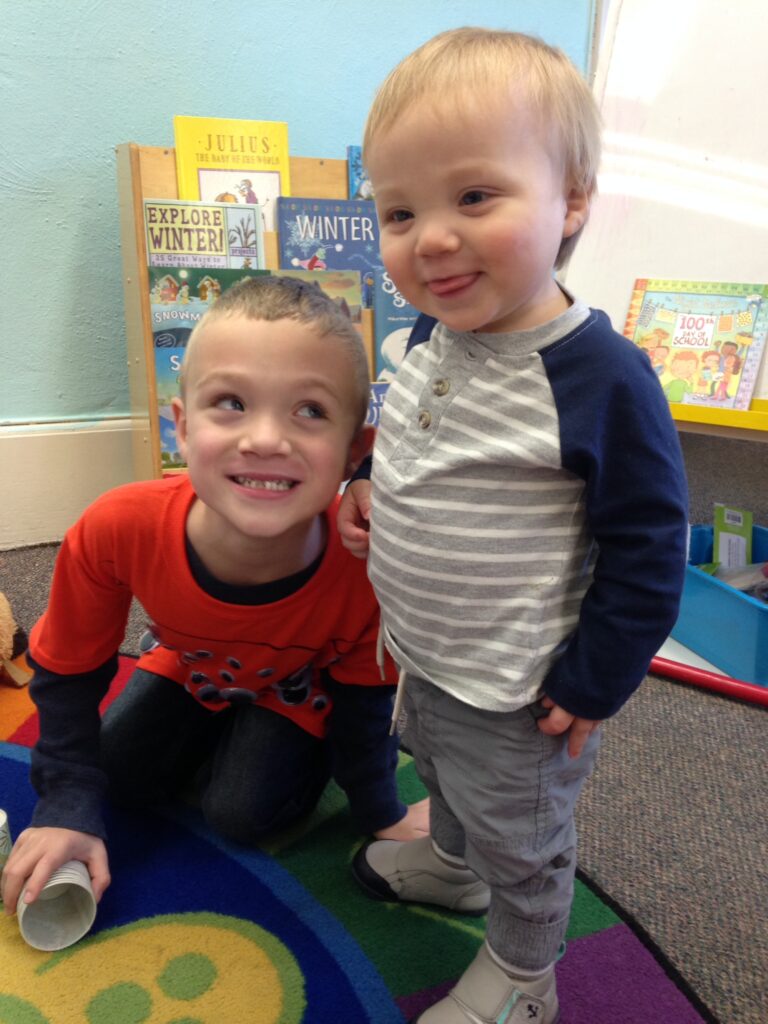
The cute little babies are now adorable young men (sharing photo proof of all three of my boys so none of them get mad at me ?):
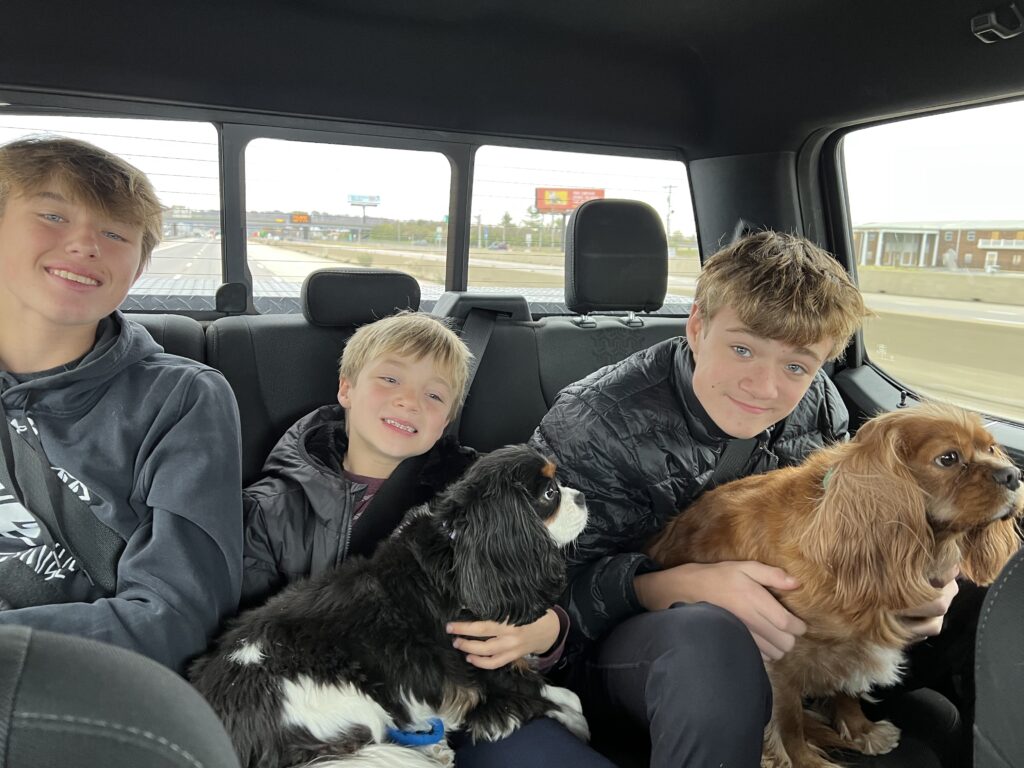
And, my business has grown just as much in the past 7 years.
A few highlights:
We have grown SO MUCH in the past 7 years. I’m so proud of the team, our clients, and the beautiful culture we have all created in our work lives.
Thanks for coming along for the ride! The next 7 years are going to be even more fun.
You’ve seen the beautiful artwork on Hedy and Hopp’s website, social media and podcast, but did you know who created it? Today you get to meet her. Jessica Hitchcock is the company’s Artist In Residence for 2022 and has graciously joined the show to talk with Jenny.
Jessica didn’t travel down the most traditional path in becoming an artist. She started out going to business school and had a strong interest in accounting, but her love for art was still calling. She started doing bookkeeping for an arts organization, while still creating her own pieces. The art side-hustle grew over the years, and she was able to quit the 9 to 5 and become a full time artist.
Jenny talks about the Artist in Residency program they have at Hedy and Hopp, and why it is an important part of their values as a company. Jessica discusses why it is so refreshing to collaborate with a company that places such importance on the arts and local community. She also gives advice to other artists who haven’t yet taken the step to put their work out into the world. Jessica even has coaching classes for artists looking to take that leap! Listen to end when Jenny gives information about how you can help Hedy and Hopp choose the Artist In Residence for 2023. See the link below the video.
Watch their discussion below or listen to the podcast, We Are Marketing Happy – A Healthcare Marketing Podcast.
Other Links and Resources
Connect with Jessica on Instagram: https://www.instagram.com/jessica_hitchcock/
Connect with Jenny on LinkedIn: https://www.linkedin.com/in/jennybristow/
Submit an Artist for consideration for 2023: https://forms.gle/yxdcUBYAcRzvWkJZ6
***********
Full Transcript:
Jenny: [00:00:00] Hi friends. Welcome to today’s episode of We Are Marketing Happy, a Healthcare Marketing podcast. I’m Jenny Bristow. I’m the CEO and owner of Heddy & Hop, and I am so excited for today’s guest. We have Hedy & Hopp’s Artist in Residence, Jessica Hitchcock. Our Artist in Residence program is something that we started this year along with our rebrand.
And it’s something that’s really near and dear to the hearts of all of the Hedy & Hop team members. And I’m just so excited to have you on today, Jessica, to talk a little bit about your background.
JESSICA: Well, thanks so much for having me. I’m excited.
Jenny: So I’d love to get started to have you just tell our listeners a little bit about your career in art.
How did you get started? How did you find that courage to really prioritize your passion and talk about the art show that you just had that [00:01:00] was so amazing.
JESSICA: Yes. So when it comes to like my background and history, really, I mean, I started painting back in high school and I really enjoyed it and really took to it, but I ended up going to college and got a business degree, so Bachelor’s of Business Administration.
So I really enjoyed business and accounting and bookkeeping, which I know is completely polar opposites. But I went into that field and I loved the arts. So I thought that I could marry my two passions of doing bookkeeping and financials for an arts organization, which was perfect.
So here in St. Louis, I became the Director of Finance and Human Resources for and our organization here. Very wonderful and fulfilling. And I don’t know if it was just the buzz of being around a lot of local artists and all of their creativity, but it got me back into painting. So then just for fun on the side, I started painting again and enjoying it.
And it’s just funny how it naturally involved into a side hustle. So, I had my nine [00:02:00] to five and eventually, in the mornings before work, I would wake up at four and paint. I would do commissions and different collections. And then after work I would be painting as well and fulfilling all of that.
So it just naturally grew. And that was in 2015 when I really started painting again. And it just kind of grew eventually into a second full-time job, which was wonderful. And I mean, I think that also that the side hustle, that grit, there’s a lot of people out there that have those side hustles.
It’s a lot of work and and to have that support from people is really amazing. So it was around 2017, I thought, well maybe, this would be a great fulltime career, but I’m a financial person, so I’m crunching the numbers and I’m thinking to myself it’ll be sustainable. Maybe in about two years we’ll take a look.
So in February, 2019, I left my full-time nine to five, and I transitioned to a full-time artist. So that’s where I’m at with when it comes to the painting.
And then over the next year after that, like around 2020, there were a lot of artists that wanted [00:03:00] to learn how to create a sustainable art business.
Not just learn how to paint, because a lot of these artists already knew how to paint and were phenomenal artists. They just wanted to learn maybe the marketing or the financials or really just how to pretty much take their artwork off the easel and put it out into the world. And so that was just another fulfilling piece was coaching artists and mentoring them on how to do that and seeing them flourish and learn things that I enjoy and that comes so easy to me.
And just seeing them pick up on it and just seeing where they go in their art careers has been really fulfilling. So it’s kind of like another double whammy of meshing those two loves of business and art.
Jenny: Yeah, it’s so beautiful. And I’ll tell you that the way that I found you originally was through Instagram.
You are very strong in social media usage. I was immediately a fan of your art, but then also your message around really empowering people to be able to, [00:04:00] bring their art more into the front of their life versus something that had to be done on nights and weekends. So it’s a really beautiful message.
JESSICA: Oh, well thank you very much. Yeah. I mean, and I think that a lot of artists, we don’t hear that enough of just the empowerment, and I hate this saying, the starving artist. I just always wanna get away from that and like, not throw that out there. Cause I feel like that’s an identity that we carry with us when we keep throwing that out there and it’s like, it does, we don’t have to be starving artists.
We can really create a very sustainable and lucrative art business, I mean, it’s a real thing. So being able to share that with artists and really empower them means a lot to me.
Jenny: I love it. Well, I wanna talk a little bit about our Artist and Residence program. The reason why we created it, and we’re so proud to have you as our inaugural artist, but we created the Artist and Residence Program because, as an organization, one of our core values is really understanding that the [00:05:00] work that we do is really important and we’re very passionate about improving patients access to care.
But at the end of the day, we’re all so much larger than our jobs. We’re so much larger than our job titles or our salaries even that we make for our positions. We’re whole people. And so we thought the Artist in Residence program would be a really great way to be able to serve a dual purpose, not only to be able to have beautiful art to be able to incorporate into our social media profiles, our podcast art (anybody listening to or watching this podcast right now, it’s Jessica’s Art that is featured for our episode titles). You’re all over our website. We have an Artist in Residence page that highlights you. And so in addition to being able to kind of have that physical reminder of seeing the art, it’s also an opportunity to be able to provide a small financial stipend to an artist to allow them more time to create art and do the things they’re passionate [00:06:00] about and relieve just a little bit of that financial pressure.
So one thing I’d love to hear from you, because right now our applications are open for 2023 Artists, I’d love to hear from you is any advice or guidance to artists that might be thinking about applying or anything that maybe you got out of the participation in relationship this year, I would just love some candid feedback from you.
JESSICA: Yes. It’s wonderful that you all do this and your organization does this. First of all, I just wanted to commend you on that because it really does feel good, especially when you create an art business, to be able to collaborate with people that share the same values and beliefs that you have.
So just being in, collaborating with all of you on how you empower artists and, just the positivity and sharing the joy and really supporting artists an having that message, it’s just what you do is wonderful and it’s just a joy to collaborate with you. Just to be able to share the same values is really great.
The [00:07:00] collaboration has just been wonderful. Your team is great. I was very honored to be able to meet them in person and just, they’re also. I don’t know, like vivacious, I can’t think of the right word right now, but they’re all just wonderful people. So just again, being part of your organization in that way and part of your mission is just incredible.
So being able to have the colorful, joyful paintings kind of spread this positive message and positive air throughout the website and the podcast images and in all of these things it has been really great to be able to meet all of you and be part of your mission as well and financially, the fact that you all, you, it’s just wonderful to see other organizations that find value in artists. So the fact that you all financially support the artists as well, your artists and residents on a month to month basis, everything throughout a year is just really, it means a lot and it really shows a lot of who you are as an organization and [00:08:00] what you value.
So the collaboration’s just been wonderful and seeing all the all the wonderful colorful images just pop up and just how you’ve incorporated that into your brand is really beautiful. So I’m just really honored and and some advice for artists. I mean, it really comes down to having the courage to really share your artwork, to share your vision and your mission and and what lights you up sometimes.
I know that sharing artwork is very, it can be intimidating because it’s an extension of ourselves and and it seems very personal, of course, when we create our artwork. And so to be able to show up even on social media, it’s a lot. It takes a lot. So really just encouraging artists to continue to share their artwork and not just leave these beautiful paintings on an easel or hanging in a studio to really put them out into the world to push you to have that courage to do that. Because like you mentioned, that’s how you came across me on Instagram and it really took many years of courage to show up and share what I’m creating, even [00:09:00] though it’s, it’s very intimidating, but but good things can really come out of it.
So being able to take that first leap and that first step can really create a lot of momentum and a lot of great things.
Jenny: It can. So, for anybody who’s listening, who is interested, either if you are an artist or if you know of an artist and have somebody that you’re a big fan of, I’m gonna put a link to the Artist in Residence Nomination form.
It is super simple. We don’t need you to write a novel. We really are just looking for the artist’s name and social media handles. So share it with us. We’re going to be making our decision mid-December. And reaching out to the artist to be able to solidify our 2023 artist. One thing I wanted to note before we wrap Jessica, is I wanted to just comment on what a rockstar you are for being on the podcast today.
Jessica had a baby, her first baby, a daughter, Florence, last week! So you’re a Wonder woman Jessica! [00:10:00]
JESSICA: Thanks. Today is her one week birthday . So exactly one week ago. Even though I look like this, I did put on makeup today, so I feel pretty, so I feel really good, but I thought it was important to still show up and and to be live and real and that it’s not always…I was up very late last night. But to show that, I mean, it’s very real, like we can show up as we are and still share a wonderful message. And, it doesn’t always have to be Instagrammable or have a beautiful filter in order to have something impactful and meaningful in this world.
Jenny: Oh, I love it. It’s such, such a perfect message. Well, Jessica, I’m gonna link to your social media profiles in this show note so everybody can follow your art and reach out to you. What’s your plans for coaching of artists through the end of this year and early next year? If somebody’s interested in being coached, should they just reach out through your Instagram account?
What would you [00:11:00] prefer?
JESSICA: Yes. So currently everything’s wrapped up for the year. I do have one coaching client that I’m just wrapping up here for the month of December. I will be accepting clients again. It looks like they will be starting again in February, so anytime between now and December at this point, if they wanna reach out through Instagram, would be perfect.
I will have an area on my website here within the next month that shares more about what’s integrated, what’s incorporated in the coaching. It’s a 90 day coaching and mentoring experience. So, I’ll have more information on that on my website. But yes, if they wanna just show up in my direct messages on Instagram and learn a little more and just chat, that would be absolutely perfect.
Jenny: Well, Jessica, it has been a joy sharing this year with you, and I can’t wait to continue to stay in touch over time. Thank you.
JESSICA: Likewise. Thanks again for this opportunity. It’s been great. Jenny: Of course. Well, thank you everybody for tuning in. We hope to see you on our next episode of We Are, Marketing Happy.
Each year, Hedy & Hopp selects an artist to support as our Artist In Residence.
The artist receives a small financial monthly stipend in exchange for allowing H&H to leverage digital scans of their art on our digital presence (think podcast, website, social media posts, etc). The artist must have at least 30 digital scans available for use.
At H&H, we believe our lives are so much more than our job titles, and our AIR program creates a daily reminder to go out and do something you love!
Do you know of an artist that should be considered?
Submit their name and social media links using our online nomination form.
Nominations accepted through November 21, 2022.
[Last updated: April 22, 2020]
Like many of you, we’ve been getting used to the new (temporary) normal of working as a distributed team — using Zoom and Slack even more than we used to, and social distancing to help stop the spread of COVID-19. Like all of you, the health and safety of our community is our top priority during this time.
As an agency that does a lot of work in healthcare, we have seen a variety of requests come through to help prepare and send communication out to patients related to COVID-19. As a way to give back, we’ve created some “starter pack” resources related to COVID-19 and collected them on this page, which we’ll update periodically. Hopefully, these resources will be helpful as you navigate this situation. Please reach out to us if we can help your organization in any way.
If you have a Google Optimize account, there are new features to quickly add temporary messages that will keep your users updated on any recent changes. Learn more on Google’s Marketing Platform blog.
If your organization is looking to send out a COVID-19 response email, you can use this template to get started. We created the template with healthcare providers in mind, specifically those who might not have an internal marketing team or an agency partner. It’s got some ready-to-go content from the CDC and other trusted sources, and you can customize it with your organization’s branding and content. Download the HTML to use with your preferred email platform. (Also, if you’re interested in having us build out an email for you in a custom system, contact us.)
With digital communication and telehealth being more necessary than ever, now might be the time to consider how your marketing and analytics tools stack up when it comes to HIPAA compliance. We’ve compiled this useful list of tools and platforms that are either HIPAA compliant out of the box or can be customized for HIPAA compliance. If your organization deals with PHI and is doing any kind of website analytics, business intelligence, or data management, this blog post will be helpful.
Healthcare companies are dealing with a lot right now, including the need for new COVID-19 communications. You’ve most likely seen that OCR announced HIPAA flexibilities during the COVID-19 emergency.
We put together this list of some noteworthy data visualizations related to COVID-19, with links and commentary from our data experts. As we navigate these “uncharted waters,” we think it’s inspiring to see all the different ways people are using data to create real-time maps, dashboards, and other visualizations to help communicate crucial information.
https://www.linkedin.com/pulse/helpful-data-visualizations-covid-19-links-jenny-bristow/
If you’re working from home like we are, you might be interested in these free virtual training and professional development opportunities:
Want to improve your data analytics chops? You’re in luck! Every weekday in April, the Decision Science team at Hedy & Hopp
will be releasing a short, practical tutorial to help you strengthen your tracking, data analysis, and dashboards. Check out the tutorials on YouTube and be sure to subscribe to our channel to see new videos as they are launched: